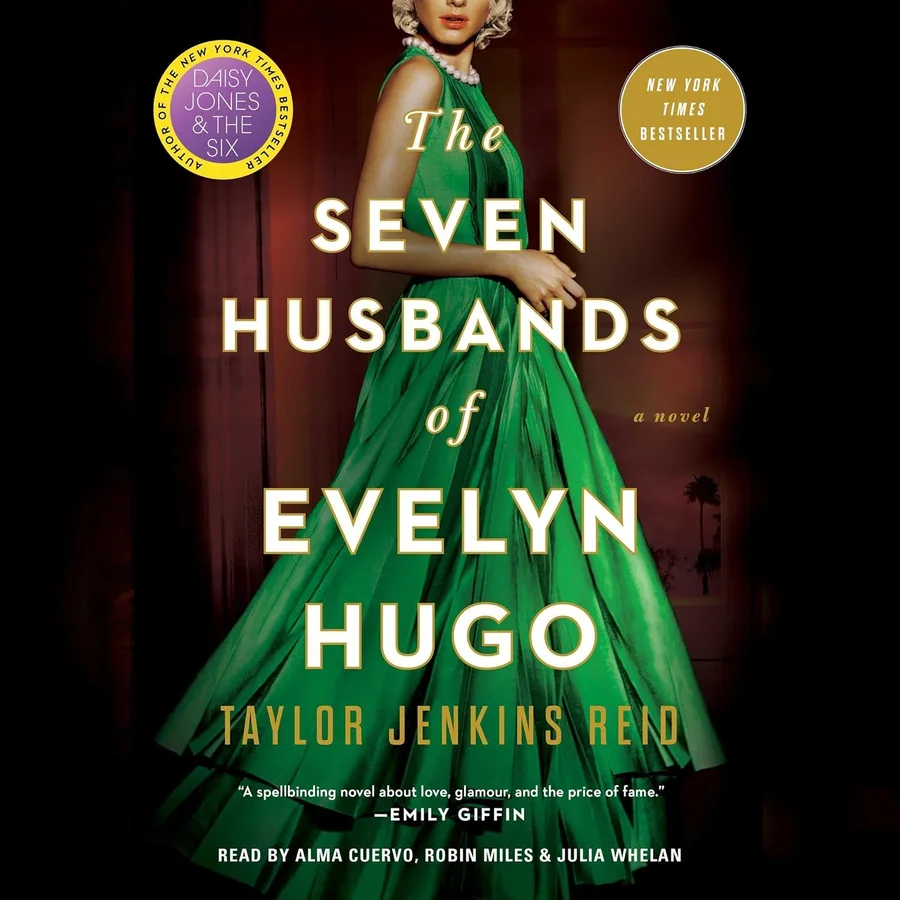
The engine of this novel is Evelyn Hugo's voice, and what a voice it is. She narrates her own life to Monique Grant with the calm of someone who has stopped apologizing for anything, and Reid lets her be calculating, vain, tender, and brutally honest in the same breath. Evelyn understands exactly how she used her beauty and how the world used her back, and she tells you about it without flinching. That refusal to soften her is what keeps the book from tipping into nostalgia. She earned her empire by deciding what she was willing to trade, and the novel never pretends those trades were free.
I read most of this on a long flight, planning to dip in and out, and instead I missed the drink cart twice. The thing that surprised me was how little I cared about the husbands once I understood what they were for. Reid builds the story as an interview that becomes a confession, moving from 1950s Los Angeles through the marriages, the studio machinery, the magazine covers, with Evelyn sorting her own past by the men whose names she wore. It's a clever frame, because those husbands turn out to be the least interesting thing about her. The real spine is a love she had to hide for decades, and the way the book keeps circling that relationship, returning to it across years and across the wrong marriages, gives the whole thing its ache. From my own reading: Evelyn is bisexual, and that hidden love — the book is, after all, ranked #1 in LGBTQ+ Romance — is the wound the glamour is built to cover. The moment that landed hardest for me wasn't a betrayal or a scandal but a small, ordinary scene of two people allowed to be together in private, and how quickly it has to end.
The present-day thread with Monique is the quieter half, and I'll be honest, it sometimes felt like the price of admission to get back to Evelyn. Monique arrives flattened by a stalled career and a marriage that's ending, and her growing pull toward the actress is convincing, but her chapters carry less voltage than the past. There's a question hanging over why Evelyn chose her, and it pays off; some readers will guess the shape of it before Monique does, and others won't. Either way the emotional weight lands, because by then the book has made you care about both women — it just makes you wait through the dimmer scenes to get there.
Reid handles ambition and identity without turning any of it into a lecture. Evelyn's bisexuality, her Cuban heritage that the studios bleached out of her name and her image, what it took for a woman to keep her footing in an industry that owned how she looked — all of it comes through in scene and choice rather than speeches. The prose is clean and propulsive, more interested in momentum and feeling than in lyric flourish, which is exactly right for a story told by a woman who never wasted a word she didn't mean to.
Why you should read
- Readers who loved Daisy Jones & the Six and want another sweeping, voice-driven Reid novel
- Fans of old-Hollywood glamour with real stakes underneath the gloss
- Anyone wanting a queer love story at the heart of a decades-spanning narrative
- Book clubs that like big emotions, moral gray areas, and lots to argue about
What to expect
- Readers who prefer understated, ambiguous literary fiction may find the emotional beats and final revelations underlined rather than left open
- The present-day Monique sections run quieter than Evelyn's story and may feel like filler to readers impatient for the old-Hollywood chapters
This is a book-club novel in the best sense, generous and emotionally direct, with enough Hollywood texture to feel like an escape and enough heartbreak to feel like more than one. Readers who want subtle, ambiguous literary fiction may find the emotional beats a touch underlined, and the ending leans hard into revelation. But Evelyn herself is the reason to read it: a woman who tells you exactly what she did and dares you to judge her, and somehow earns your loyalty anyway.