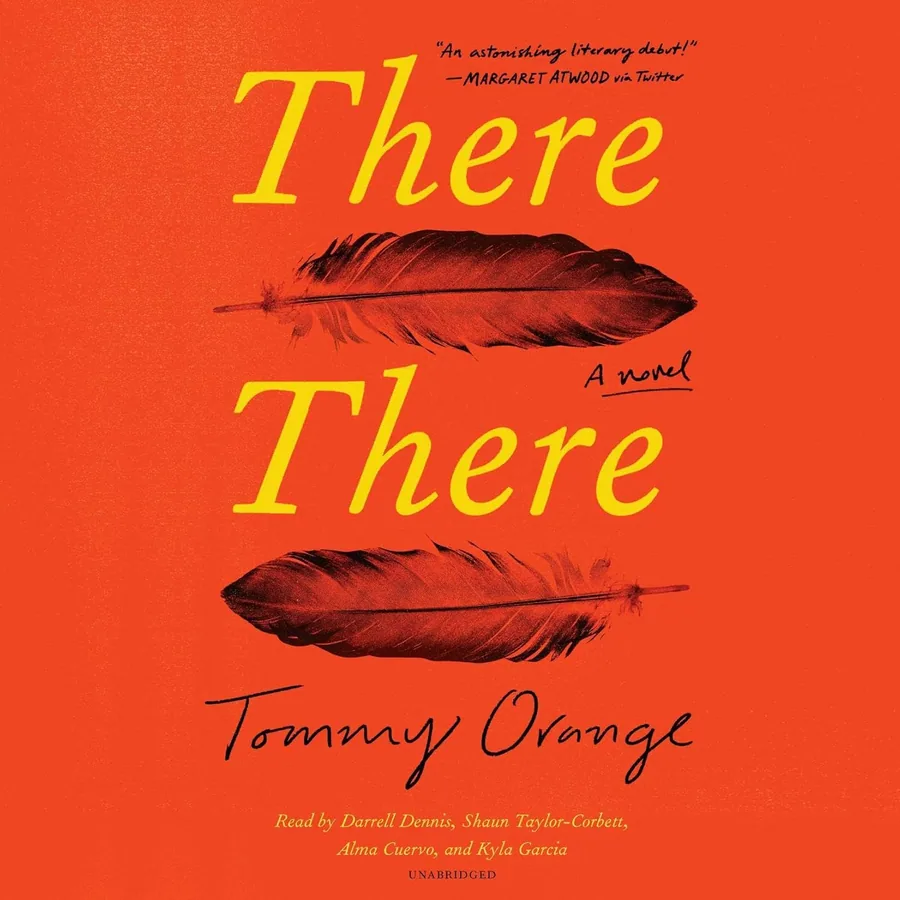
The first thing you notice is the prologue, an essay-like opening that detonates before the story even begins. Orange writes about Indian heads on test patterns, about massacres folded into cartoons, about the long, ordinary violence of being made invisible. It reads like a held breath, and it reframes everything after it. By the time the first character speaks, you understand that this book is arguing with how America has narrated Native life, and it plans to do it in voices, not arguments.
From there the structure fans out. We get Tony Loneman, whose face carries the mark of fetal alcohol syndrome and who sees himself clearly even when others won't. Jacquie Red Feather, newly sober, driving toward a family she abandoned and a grief she can't outrun. Dene Oxendene, building a project to record his community's stories. Fourteen-year-old Orvil, pulling regalia out of a closet and teaching himself to dance from videos. Orange moves through first person, third person, even a stretch of second person, and the shifts aren't showing off. Each form fits the person inside it. The effect is a chorus where every voice is distinct and every voice is also pointed at the same Saturday at the Big Oakland Powwow.
What moves me most is how Orange writes about belonging without the place that usually anchors it. These are city people, generations into the move, asking what it means to be Native when the reservation is a story your grandmother half-tells and the powwow is something you have to choose and learn. Gertrude Stein's line about Oakland having no there there becomes the book's quiet center of gravity, and Orange turns it inside out: the absence of a 'there' is exactly the wound and the inheritance these characters share. Addiction, suicide, the casual cruelty of bureaucracy, the ache of mothers and the children they couldn't keep close, all of it threads through without ever curdling into a lecture.
The novel builds toward the powwow with real suspense, and the converging-lives structure means you feel the pressure tightening even when individual chapters are slow and interior. That said, this is the place readers split. Twelve perspectives is a lot to hold, and the connective tissue between them sometimes arrives faster than your emotional attachment can. A few characters get whole rooms of interiority; others get a hallway. If you want to live deeply inside one consciousness across a long arc, the breadth here can feel like it keeps pulling you away just as you settle in. The ending, too, lands hard and fast, and some readers will find it more devastating than satisfying, though I'd argue the rush is part of the point.
Why you should read
- Readers who love multi-voice, interconnected-character novels in the vein of A Visit from the Goon Squad or Olive Kitteridge
- Anyone seeking contemporary Native and Indigenous voices front and center
- Book clubs that want a short, charged novel with plenty to argue about
- Fans of literary fiction that takes formal risks without losing emotional heat
What to expect
- With twelve perspectives, readers who prefer deep immersion in a single character may feel pulled away just as they connect
- The convergence builds to a swift, harrowing climax; those wanting a slower resolution may find the ending abrupt
- Frank depictions of addiction, suicide, and violence make this a heavier read than the powwow premise might suggest
What lingers is the prose, which can swing from plainspoken to incantatory in a single paragraph, and the generosity Orange extends to people the culture usually flattens or mourns from a distance. There There doesn't ask for pity. It asks you to see, and it makes the seeing feel like an event. It's a book-club novel that will start genuine arguments and a literary debut that earned its acclaim honestly.