Where to read or listen
- Is there an audiobook of The Handmaid's Tale?
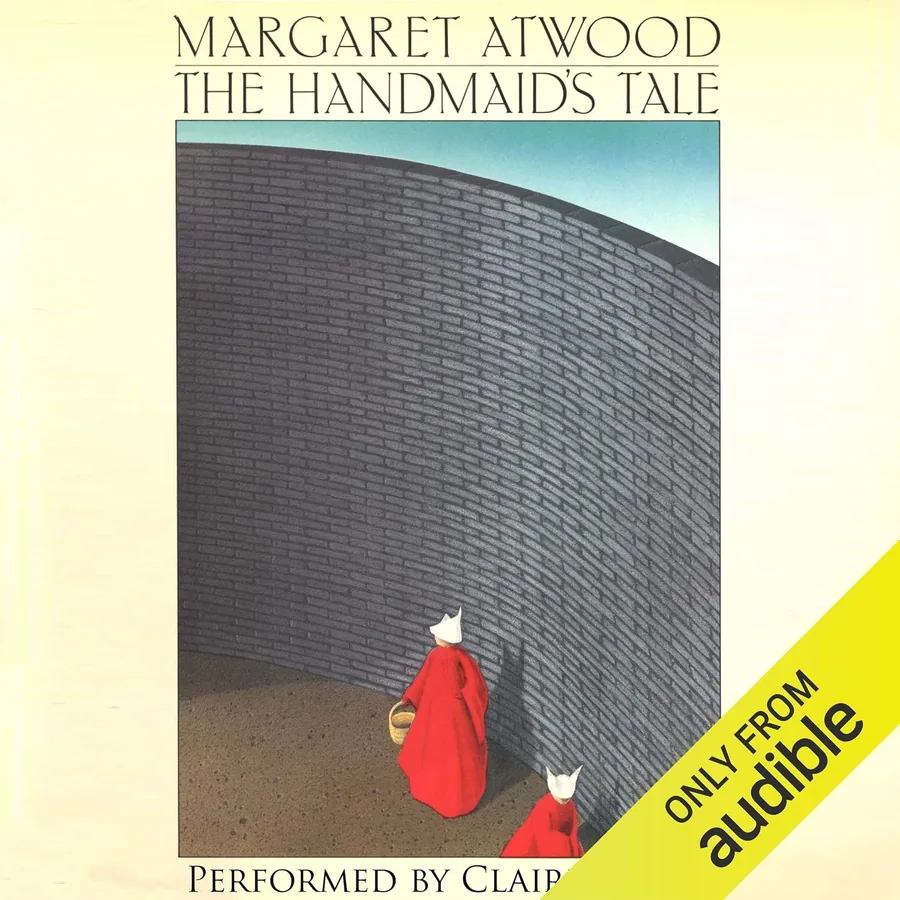
- Yes. The Handmaid's Tale has an Audible audiobook edition, narrated by Claire Danes.Listen free with Audible
We earn from qualifying Amazon purchases.
- How long is the The Handmaid's Tale audiobook?
- The The Handmaid's Tale audiobook runs 11 hr 1 min.
- Is The Handmaid's Tale on Kindle Unlimited?
- Yes. The Handmaid's Tale was included with Kindle Unlimited when we last checked on October 2, 2026.
- What formats is The Handmaid's Tale available in?
- On Amazon, The Handmaid's Tale comes as a Kindle ebook, a paperback and a hardcover.
More by Margaret AtwoodSee every Margaret Atwood book we've reviewed, with our scores.All Margaret Atwood books →
Common questions
- What is The Handmaid's Tale about?
- What makes Gilead stick isn't spectacle but bookkeeping. Atwood builds her theocracy out of recognizable parts: scripture bent to justify control, color-coded uniforms that flatten women into function, ceremonies dressed up as piety to disguise rape as duty. There are no exotic technologies here…
- Is The Handmaid's Tale worth reading?
- We scored The Handmaid's Tale 4.2 out of 5. Margaret Atwood's The Handmaid's Tale builds a near-future America remade into Gilead, a theocracy that reduces fertile women to state property. Told by Offred in fragments and held breath, it's a dystopia whose horror comes from how plausibly it's assembled. For readers who…
Advertisement
More like this
Related books

Station Eleven
Emily St. John Mandel

The Infinite State
Richard Swan

Black Cake
Charmaine Wilkerson

Small Things Like These
Claire Keegan

The Vanishing Half
Brit Bennett

The Wedding People
Alison Espach

Vox
Christina Dalcher

Wild Dark Shore
Charlotte McConaghy

The Moonflowers
Abigail Rose-Marie

Half His Age
Jennette McCurdy