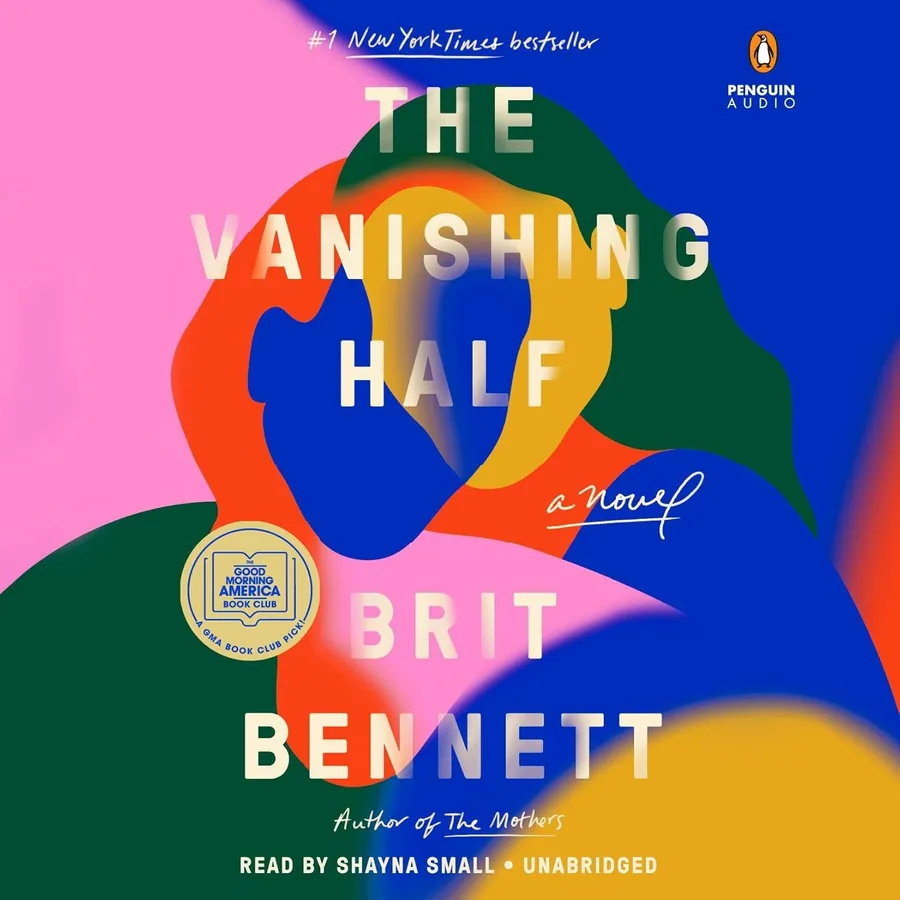
I read this over a long weekend expecting a clever premise and got something more patient than that. Desiree and Stella Vignes are identical twins from Mallard, a town fixated on light skin, and the choice that splits them at sixteen drives everything after. Stella slips into a white life and stays there. Desiree comes home. What stuck with me is how little Bennett dramatizes the act of passing itself. She skips the cinematic version and goes straight to the long aftermath, the way one decision keeps surfacing in children who have no idea what they've inherited.
The prose is clean and unhurried. A steady third person moves between the sisters, their daughters, and the people who love them, and Bennett is best in the small physical register: a hand held too tightly, a name spoken in the wrong room, a face that's both familiar and hard to look at. The book runs from the 1950s to the 1990s and travels from rural Louisiana to Los Angeles, and Bennett trusts you to keep up. She drops you into a new decade and lets the gaps close on their own. When the next generation takes over, one of the daughters' storylines gives the novel a tenderness the early chapters only hint at.
The real strength here is Bennett's refusal to keep moral score. Stella's choice is selfish and cowardly and also completely understandable, and the book never settles that into a verdict. Passing is a betrayal and a survival strategy, a freedom and a cage, all at once. That same generosity extends to other characters wrestling with who they're allowed to be, and the parallel reinventions land as feeling rather than thesis. The novel is curious about every self we perform, and about who absorbs the cost when someone disappears into a new one. There's a quiet ache in how Bennett tracks the people left holding the absence — a mother who never stops scanning crowds, a daughter who grows up around a silence she can't name.
The breadth has a price, though, and it's worth naming plainly. As the cast widens, the current that ran between the twins thins out. The later sections juggle multiple perspectives and lose some of the heat of the opening. Stella, the more enigmatic sister, stays at arm's length the whole way; she's fascinating, but her interiority is the one thing the novel keeps locked. If you want a tightly coiled, suspense-driven story, the pace will feel meditative rather than urgent. This is consequence over plot machinery, and some readers will wish it pushed harder.
Why you should read
- Readers who appreciated the moral ambiguity of An American Marriage
- Fans of multigenerational sagas like Homegoing that move across decades and geographies
- Anyone drawn to literary fiction about identity, race, and self-invention
- Book clubs wanting a novel that sparks genuine disagreement
What to expect
- The pace is reflective rather than urgent, so readers hoping for a plot-driven thriller may find it slow
- Stella stays deliberately opaque, and the widening cast in the later sections dilutes the intensity of the twins' early chapters
Still, it earns its reach. It's an excellent book-club novel, the kind that leaves a room split over who was right and half-convinced no one was. I came away thinking less about the twist of a secret life and more about the quiet arithmetic of who gets left behind, and who pays for it down the line.