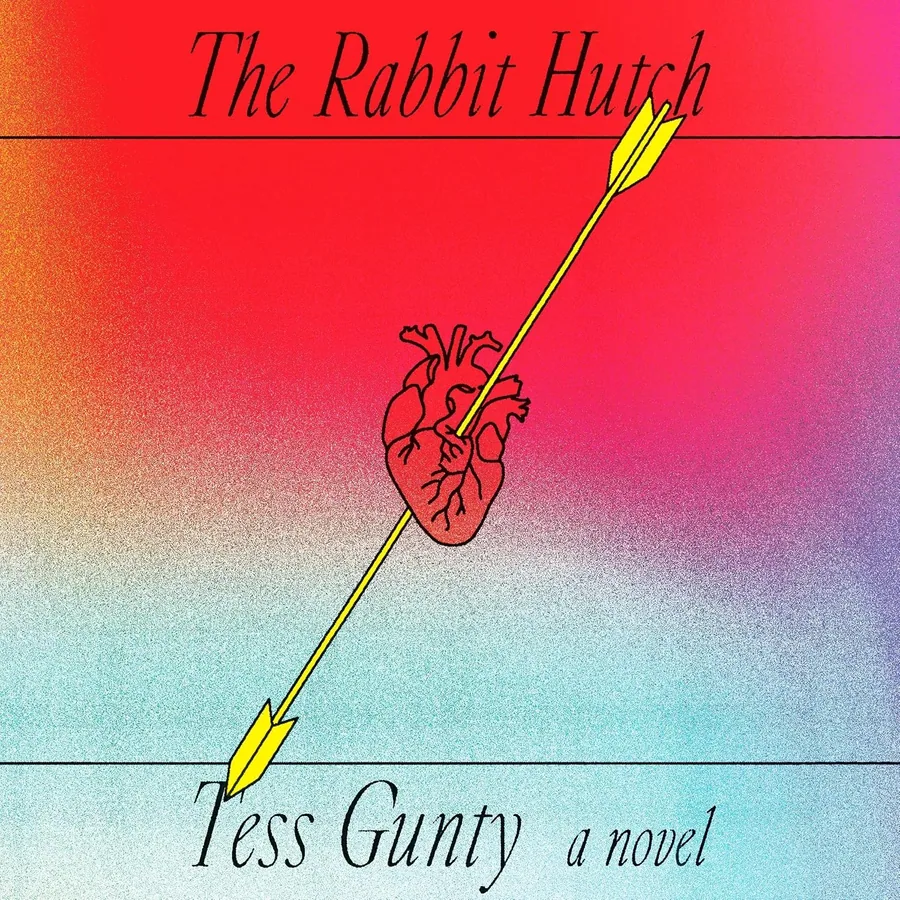
Gunty writes sentences that make you stop and reread them, and Blandine is the kind of character who earns that attention. She's brilliant and exasperating, half-feral in her intelligence, obsessed with medieval mystics who wanted to dissolve into something larger than themselves. The book opens with the promise of violence — we know something happens to her — and then doubles back to fill in the days and the people pressed up against her in the building everyone calls the Rabbit Hutch. That structure could feel like a cheap tease, but Gunty plays it as dread you can almost ignore until you can't.
What I admired most is how the novel refuses to stay in one shape. There's a chapter rendered as comic-strip panels, an online obituary writer's comment section, the interior monologue of a woman terrified of her own newborn, the slick corporate-speak of developers eyeing the town's last green space. Gunty is clearly a maximalist, and she throws everything at the page. Vacca Vale itself becomes a character — the rusted-out grief of a place that built cars and got abandoned, the kind of American town that polite culture stopped looking at. The rodent infestation Blandine wages war against works as the book's controlling image: vermin, infestation, the people society treats as disposable.
The emotional engine is loneliness, and the loss of self that can feel like the only available freedom. Blandine and the three boys she lives with have all aged out of foster care, failed by every institution meant to catch them, and Gunty is unsparing about what that does to a kid's sense of being real. A storyline involving a teacher and a younger Blandine lands with quiet horror precisely because Gunty trusts you to feel the wrongness without underlining it. The book is bitingly funny in places — Gunty has a satirist's ear for the way modern life talks past itself — and then it turns and breaks your heart in the same paragraph.
The caveat is structural. This is a sprawling, mosaic novel, and not every tile is laid with equal care. Some of the secondary perspectives feel more like clever set pieces than fully inhabited people, and readers who want a tight, propulsive plot may find the middle stretches diffuse, more interested in texture and theme than momentum. The ending is divisive among readers for good reason — it's deliberately strange and more lyrical than literal, and if you want clean resolution, you may close the book feeling held at arm's length.
Why you should read
- Readers who love voice-driven, formally inventive literary fiction
- Fans of Raven Leilani's Luster or Ottessa Moshfegh's strangeness
- Anyone drawn to Rust Belt settings and stories about kids the system failed
- Book clubs willing to argue about an ambiguous ending
What to expect
- Readers who want a tight, plot-forward story may find the multi-perspective structure diffuse in the middle
- The lyrical, ambiguous ending divides readers — if you need clear resolution, it may frustrate you
- Some secondary viewpoints read as clever set pieces more than fully developed characters
Still, this is a debut of real nerve and a writer who clearly trusts her own weirdness. If you read for voice and you don't mind a novel that takes detours, Blandine will stay with you. Gunty wrote one of the most original American novels of recent years, and the National Book Award nod feels earned rather than fashionable.