The pleasure of this book is almost entirely a matter of voice. Keiko narrates her life in a flat, scrupulously logical register, describing the store's chimes, restocking patterns, and customer greetings with the reverence other people reserve for religion. Murata, in Ginny Tapley Takemori's clean translation, makes that flatness do an enormous amount of work. Because Keiko reports everything plainly — including childhood moments where her responses to violence and conflict are unsettlingly off-key — you laugh and then catch yourself, unsure whether you're laughing at her or at the world that keeps insisting she's broken.
The structure is simple and the book is short, barely more than a long afternoon's read. Keiko works at the Smile Mart, has worked there for eighteen years, and has organized her whole identity around its manual and its predictable demands. The store gives her scripts: how to dress, how to speak, how to mimic her coworkers' enthusiasm so convincingly that she passes for ordinary. The plot kicks in when the pressure to want what other people want — a husband, a real career, a private life that looks correct from the outside — pushes her toward a deeply uncomfortable arrangement with a bitter, freeloading man named Shiraha. That section sharpens the satire and turns the comedy faintly menacing.
What I keep thinking about is how generous the book is to its narrator without ever sentimentalizing her. Murata doesn't ask you to pity Keiko or to fix her. The store, for all that outsiders see it as a dead end, is genuinely where she comes alive; her competence there is real and even moving. The novel's quiet argument is that a life can be small, repetitive, and openly weird and still be a good fit for the person living it — and that the relentless social demand to upgrade into a 'normal' life is its own kind of violence. People who've ever felt they were performing a personality to keep others comfortable will feel a jolt of recognition.
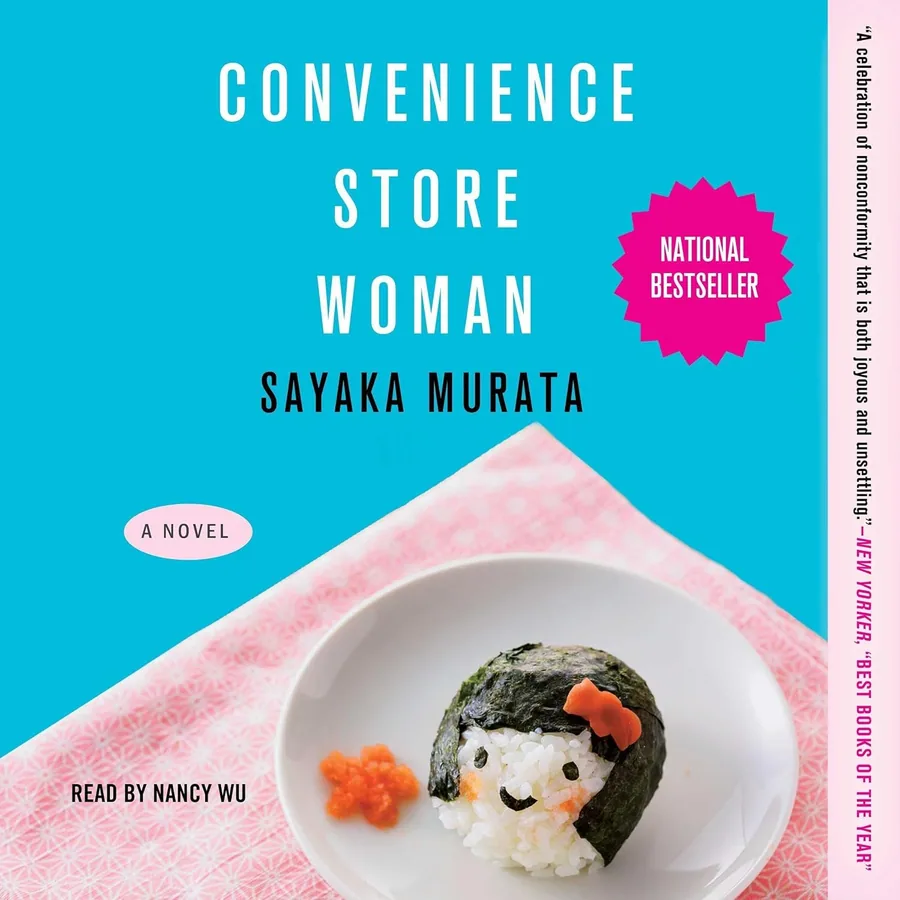
The satire lands hardest on contemporary work culture and the machinery of conformity, and it's funny in a dry, observational way rather than a warm one. Don't come expecting the cozy comfort read the cover sometimes gets sold as. The tone is cool and clinical by design, and Keiko's interiority is kept at a deliberate remove, so readers who want deep emotional immersion or a fully resolved arc may find the ending more ambiguous and the character more opaque than satisfying. Shiraha, in particular, is drawn as a thesis more than a person — a vehicle for the book's argument about social parasitism and male entitlement.
Why you should read
- Readers who love voice-driven, slightly off-kilter narrators
- Fans of translated Japanese literary fiction and deadpan satire
- Book clubs that enjoy short, debatable novels about conformity and identity
- Anyone drawn to outsider characters who refuse to be 'fixed'
What to expect
- Readers wanting a warm, cozy comfort read may be surprised by how cool and clinical the tone actually is
- Those who prefer rich emotional interiority and tidy resolution may find Keiko opaque and the ending deliberately open
- Shiraha works more as a satirical type than a fully rounded character
Still, this is a small book that lodges itself in you. It does in under two hundred pages what many novels can't manage in four hundred: it makes you reconsider what counts as a meaningful life and who gets to decide. For book clubs it's a gift, because everyone walks away arguing about whether Keiko is liberated or trapped, and the text genuinely supports both readings. Read it in one sitting, then sit with it a while longer.