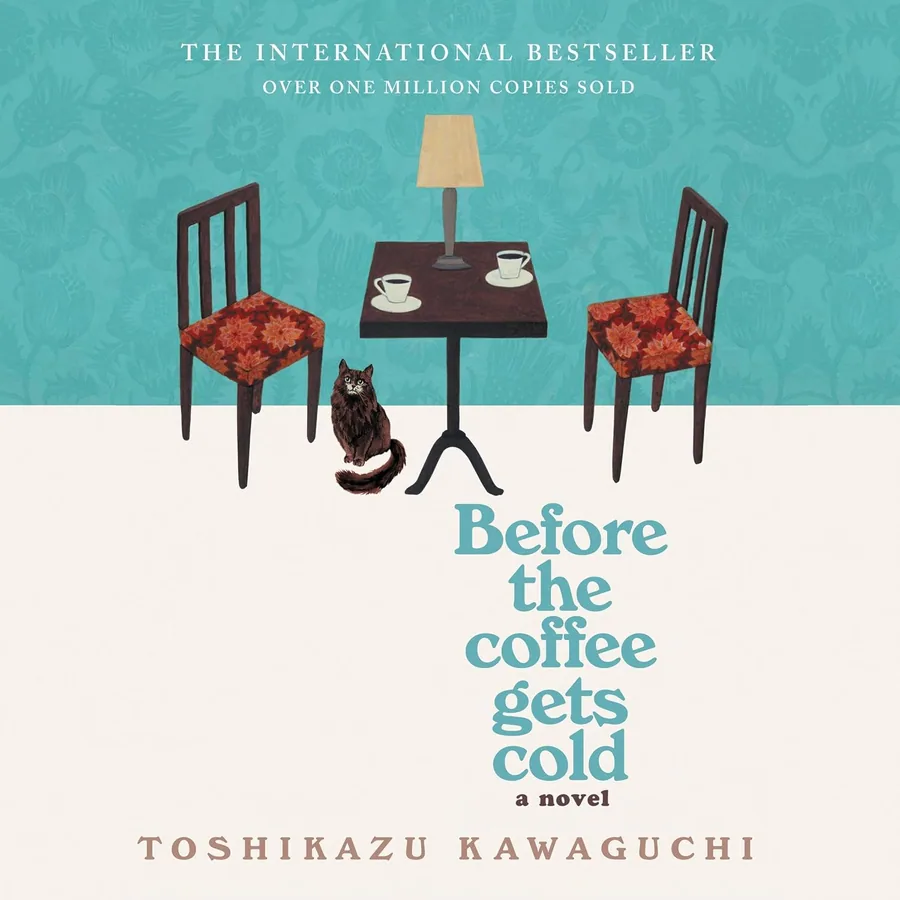
Where to read or listen
- Is there an audiobook of Before the Coffee Gets Cold?
- Yes. Before the Coffee Gets Cold has an Audible audiobook edition, narrated by Arina Ii.Listen free with Audible
We earn from qualifying Amazon purchases.
- How long is the Before the Coffee Gets Cold audiobook?
- The Before the Coffee Gets Cold audiobook runs 6 hr 52 min.
- Is Before the Coffee Gets Cold on Kindle Unlimited?
- Yes. Before the Coffee Gets Cold was included with Kindle Unlimited when we last checked on October 4, 2026.
- What formats is Before the Coffee Gets Cold available in?
- On Amazon, Before the Coffee Gets Cold comes as a Kindle ebook, a paperback and a hardcover.
Common questions
- What is Before the Coffee Gets Cold about?
- There's a rule at the heart of this book that does most of the emotional heavy lifting: you can go back, but nothing you do will alter the present. That single constraint is what saves the premise from wish-fulfillment and turns it into something more bittersweet. Kawaguchi isn't interested in…
- Is Before the Coffee Gets Cold worth reading?
- We scored Before the Coffee Gets Cold 4 out of 5. Toshikazu Kawaguchi's Before the Coffee Gets Cold imagines a Tokyo café where you can travel back in time, but only until your coffee cools. It's a quiet, sentimental novel of regret and second chances, built around four customers who can't change the past but might just change…
Advertisement
More like this
Related books

The Shampoo Effect
Jenny Jackson

The Witches of Cambridge
Alice Hoffman

The Missed Connection
Tia Williams

Convenience Store Woman
Sayaka Murata

The Rabbit Hutch
Tess Gunty

White Teeth
Zadie Smith

Lone Women
Victor LaValle

The City We Became
N. K. Jemisin

The Vanishing Half
Brit Bennett

Tomorrow, and Tomorrow, and Tomorrow
Gabrielle Zevin