Where to read or listen
- Is there an audiobook of Sharks in the Time of Saviors?
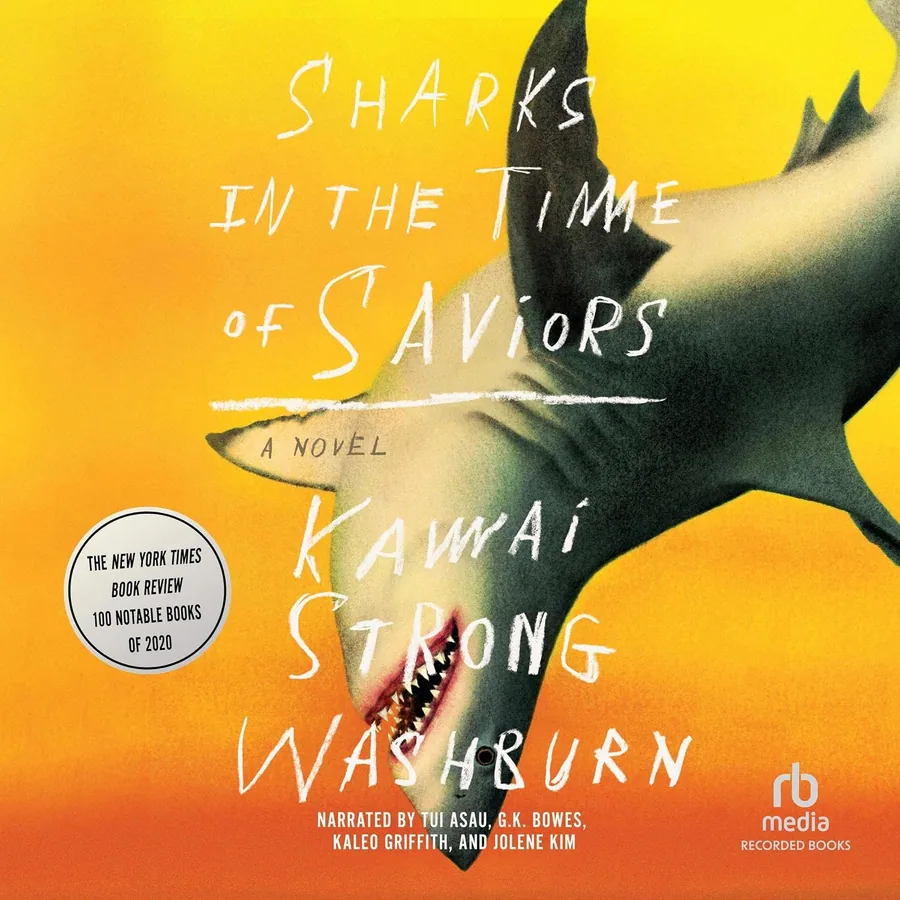
- Yes. Sharks in the Time of Saviors has an Audible audiobook edition, narrated by Jolene Kim, Kaleo Griffith, G. K. Bowes, and Tui Asau.Listen free with Audible
We earn from qualifying Amazon purchases.
- How long is the Sharks in the Time of Saviors audiobook?
- The Sharks in the Time of Saviors audiobook runs 10 hr 38 min.
- Is Sharks in the Time of Saviors on Kindle Unlimited?
- No. Sharks in the Time of Saviors was not included with Kindle Unlimited when we last checked on October 5, 2026.
- What formats is Sharks in the Time of Saviors available in?
- On Amazon, Sharks in the Time of Saviors comes as a Kindle ebook, a paperback and a hardcover.
Common questions
- What is Sharks in the Time of Saviors about?
- What hooks you first is the chorus. Washburn hands the story to the Flores family in rotating first-person voices, and each one arrives with its own grain and music. The mother speaks with a kind of devotional ache. Dean, the older brother, talks in the swagger and grievance of an athlete chasing…
- Is Sharks in the Time of Saviors worth reading?
- We scored Sharks in the Time of Saviors 4.3 out of 5. Kawai Strong Washburn's Sharks in the Time of Saviors is a Hawaiian family saga where ancient gods press up against a present of foreclosure, scholarship debt, and exile to the mainland. A boy plucked alive from a shiver of sharks becomes both the family's miracle and its slow…
Advertisement
More like this
Related books

The Ocean at the End of the Lane
Neil Gaiman

The Wedding People
Alison Espach

Practical Magic
Alice Hoffman

Wild Dark Shore
Charlotte McConaghy

The Moonflowers
Abigail Rose-Marie

Half His Age
Jennette McCurdy

Black Cake
Charmaine Wilkerson

The Handmaid's Tale
Margaret Atwood

Small Things Like These
Claire Keegan

The Vanishing Half
Brit Bennett