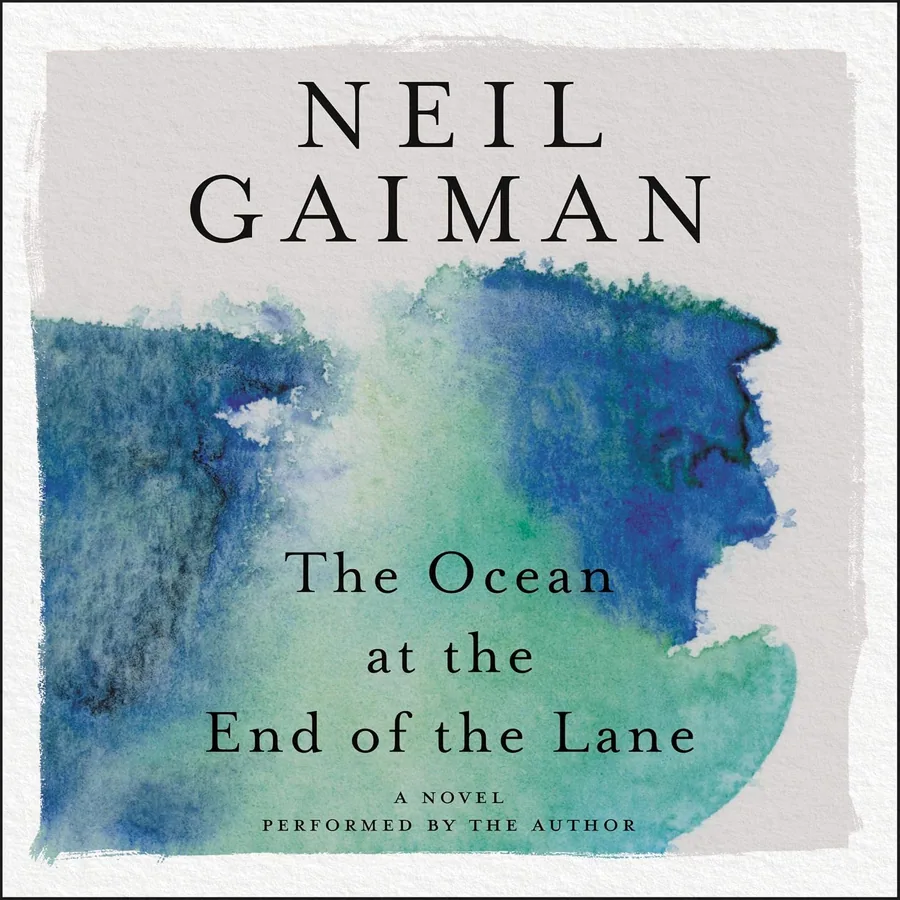
This is a book about how memory protects us by lying. The frame is simple: a middle-aged man comes back to the Sussex countryside for a funeral, drifts down a lane he hasn't thought about in decades, and sits by a pond that a strange neighbor girl once insisted was an ocean. From there the story drops into the seven-year-old version of him, and Gaiman commits fully to a child's logic — where the things that frighten you are real, enormous, and impossible to explain to grown-ups. The boy is a reader who prefers books to people, and Gaiman renders his loneliness with a precision that aches. He doesn't sentimentalize childhood; he remembers it as a state of relative powerlessness, where you're handed events you can't refuse and dangers you can't name.
The engine of the book is the Hempstock women who live at the farm at the end of the lane — Lettie, her mother, and her grandmother, three figures who feel older than the land they sit on. They're warm and offhandedly cosmic, dispensing food and protection while hinting at a knowledge that bends the edges of the world. When something genuinely malevolent enters the boy's house, wearing a pleasant face, the novel turns into a story of survival that's far scarier than its page count suggests. Gaiman's villain works because she exploits exactly the gap between what a child sees and what adults are willing to believe. That's the real horror here — not monsters, but not being believed.
What I admire most is the prose. Gaiman writes in clean, image-rich sentences that never strain for effect, and he keeps circling back to a handful of motifs — water, hunger, doors, the difference between what's vast and what's small — until they accumulate real weight. The ocean-in-a-pond image is the whole book in miniature: the idea that something immense can be folded into something ordinary, that a child can hold knowledge too big to keep. It's magical realism that earns its magic by grounding everything in domestic detail, in the texture of a 1960s English household, in the comfort of a kitchen and the terror of a flooded field.
Emotionally, this lands hardest if you've ever felt small and unprotected, or if you've watched adults make decisions that reshaped your life without your consent. The ending doesn't tie itself into a neat bow; it understands that some experiences leave you changed in ways you'll never fully access again. It's a quick read by the clock, but it lingers, and it rewards a second pass once you know what the frame is doing.
Why you should read
- Readers who loved the dark fairy-tale tone of Coraline or Stardust but want something written for adults
- Anyone drawn to literary magical realism about childhood and memory
- Book clubs wanting a short, discussion-rich novel with emotional depth
What to expect
- Readers wanting the epic scope and dense world-building of Gaiman's longer novels may find this one slight and inward-looking by comparison
- The dreamlike, deliberately hazy logic won't satisfy readers who want every magical rule fully explained
For all its gentleness, this is a melancholy book, and readers expecting the sprawling invention of American Gods or the sustained mythic scope of his bigger novels should adjust their expectations — this is intimate, restrained, and deliberately limited in scale. That's a feature, not a flaw, but it's worth knowing going in.