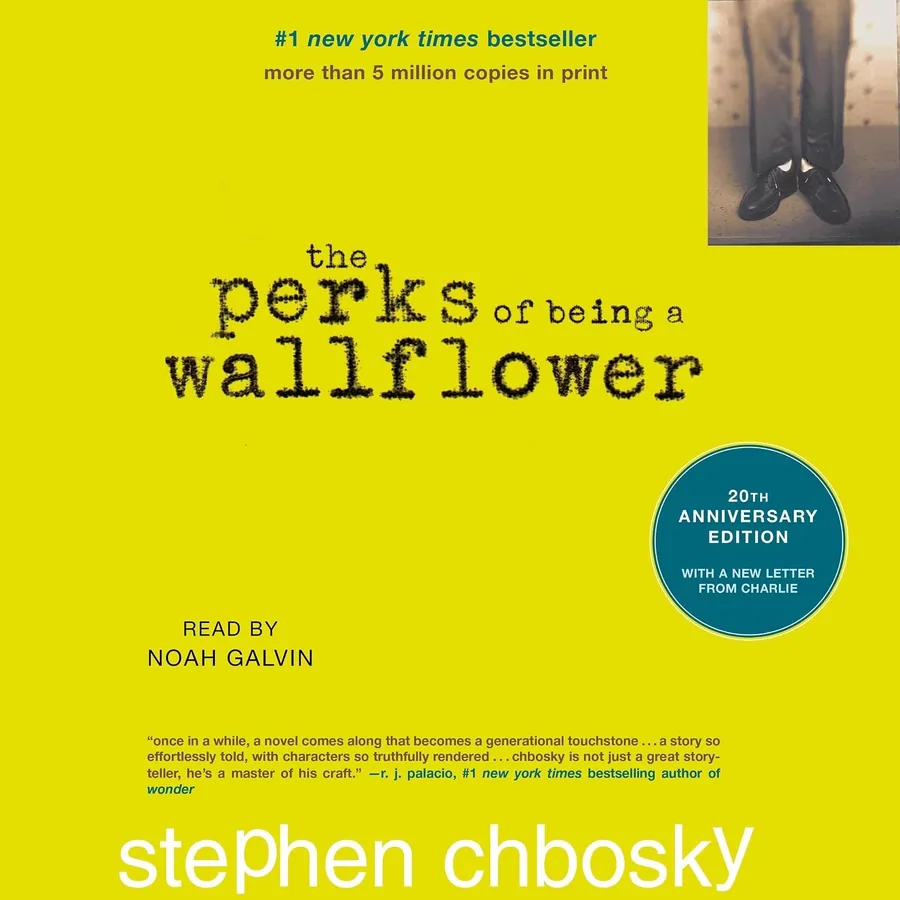
The voice is the thing here. Charlie addresses his letters to an anonymous "friend," and his sentences land plain and a little off-kilter, the way a smart kid talks before he's learned to perform for anyone. He notices everything and understands only some of it, and Chbosky lets that gap carry the whole emotional load. We watch the parties, the music, the family arguments through a narrator who's always a half-step behind, and that lag is what turns small moments into something that aches. The prose stays unguarded on purpose. The restraint is the point, and it took me a few pages to stop wanting it to be prettier and start trusting it.
The story spans a single school year, and it moves the way real adolescence does, in fits and lulls with sudden jolts of incident. Charlie falls in with a pair of seniors, Sam and Patrick, who fold him into their world of midnight movie screenings, music passed hand to hand, late drives, and the giddy relief of belonging somewhere at last. Chbosky is good at the texture of those friendships. The inside jokes, the fierce loyalty, the way the right song at the right hour can feel like being pulled out of the water. There's real comedy too, most of it through Patrick, who to my reading is the warmest presence in the book, the kind of friend you wish you'd had at fifteen.
Underneath the sweetness runs a darker current. This is a novel about grief, about old wounds, and about the cost of staying a passive observer of your own life. Charlie's habit of absorbing other people's pain rather than facing his own builds so quietly you barely register the pressure until the book turns toward what he's been avoiding. Chbosky handles the heavy material, abuse and mental illness and loss, without sensationalizing any of it, and the late emotional payoff lands hard precisely because the groundwork was so gentle. The recurring word "participate" became the line I kept circling back to. It's the whole spine of Charlie's growth in a single verb.
What surprised me most on this read was how generous the book is toward its adults. The English teacher who feeds Charlie books, the parents who fumble but keep trying, the older sister carrying her own private weather. Chbosky doesn't reduce anyone to a role, and that fairness gives the world a fullness most teen narratives skip. The letters accumulate into something larger than a diary too. By the end you feel you've watched a person assemble himself out of other people's kindnesses and a few hard truths he finally lets himself look at directly.
Why you should read
- Readers who love a vulnerable, voice-forward narrator
- Fans of quiet coming-of-age stories about friendship and belonging
- Anyone drawn to honest, interior teen narration in the Salinger or Blume vein
- People who loved the film and want the fuller emotional arc
What to expect
- Readers who prefer plot-driven momentum may find the diary structure meandering at times, since the book trades incident for feeling
- Charlie's deliberately naive, flat narration works beautifully for some and frustrates others. If you want polished, lyrical prose, his bare style may read as too simple
It's worth knowing what kind of reader this suits. If you came of age on this book or on its film, the nostalgia will hit you fast. If you're drawn to voice-driven, interior coming-of-age stories, the kind that prize a kid's actual inner weather over plot machinery, Charlie will feel like someone you knew. For my money it sits in that Salinger and Judy Blume lineage of honest teen interiority, though that's my own read rather than how the book bills itself. It's short, it's emotionally direct, and it doesn't flinch from what teenagers actually carry.