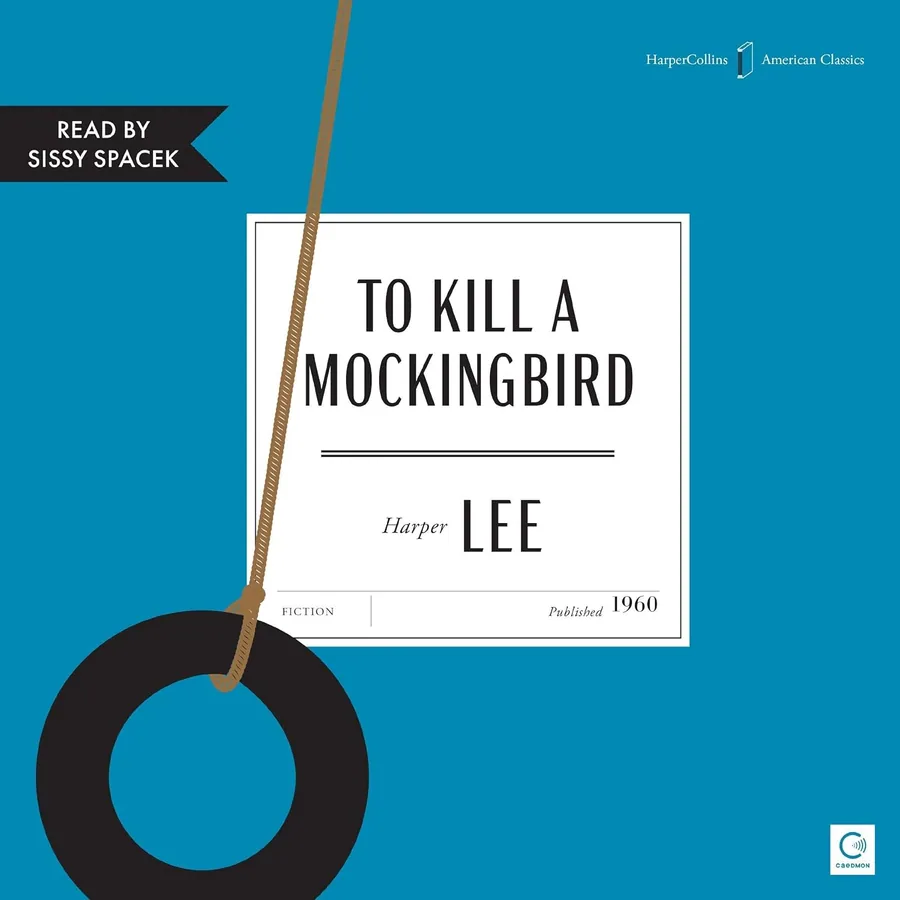
I first read this in ninth grade and resented every assigned page. Coming back to it as an adult, I was surprised by how patient the book is before it ever reaches the trial. Lee builds a whole sleepy ecosystem first: a hot Maycomb summer, the dare-driven obsession with the recluse Boo Radley, the games Scout and her brother Jem invent to outrun boredom. By the time the real moral weight arrives, we already love these kids and trust the voice carrying us through. The injustice, when it lands, lands on people we know.
Scout's voice is the engine. The book is narrated by an adult looking back, but Lee keeps the child's logic intact, so two views run at once: the innocent observation and, underneath it, the grown-up understanding of what that observation actually meant. It's funny in a dry, watchful way, especially when Scout sizes up neighbors and teachers, and that humor makes the harder material bearable. Atticus Finch, the father defending a Black man wrongly accused, has become an almost mythic figure. On the page he's quieter than his reputation. He explains himself to his children plainly and asks them to picture their way into other people's lives.
The themes track exactly where the title's mockingbird keeps pointing: the wrongness of harming the harmless, the way a community can be decent face-to-face and monstrous in a courthouse, the slow education of a conscience. Lee braids the Boo Radley thread and the trial thread until they answer each other, and the payoff is emotional rather than plot-driven. This is a novel about what children learn watching adults fail, and occasionally refuse to fail.
As a reading experience it's gentler-paced than its dramatic premise suggests. Readers expecting a tight legal thriller may be surprised by how much of the book is texture: neighbors, school, the rhythm of a small town. That patience is the point, but it's worth knowing going in. There's also a long-running critical conversation worth naming here, that the racial injustice plays out mostly through a white family's moral awakening. That's a fair thing to weigh. It's a book of its moment as much as a critique of it, and it reads richest when you bring that awareness with you.
Why you should read
- Readers who love voice-driven, looking-back narrators like in A Tree Grows in Brooklyn
- Book clubs wanting a rich discussion about justice, conscience, and childhood
- Anyone returning to a school classic with adult eyes
What to expect
- Readers wanting a fast courtroom thriller may find the first half slow and atmospheric rather than plot-driven
- The story frames its racial injustice through a white family's moral awakening, a limitation that's part of the book's long critical conversation
The prose stays clean and unshowy, the dialogue still sounds like people talking, and the closing chapters do something I didn't expect at fourteen: they make the whole strange Boo Radley subplot suddenly mean everything. It's a natural fit for book clubs, for parents reading alongside teenagers, and for anyone returning to it years after a school assignment to find how much they missed the first time. Few novels are this widely read and still feel this personal.