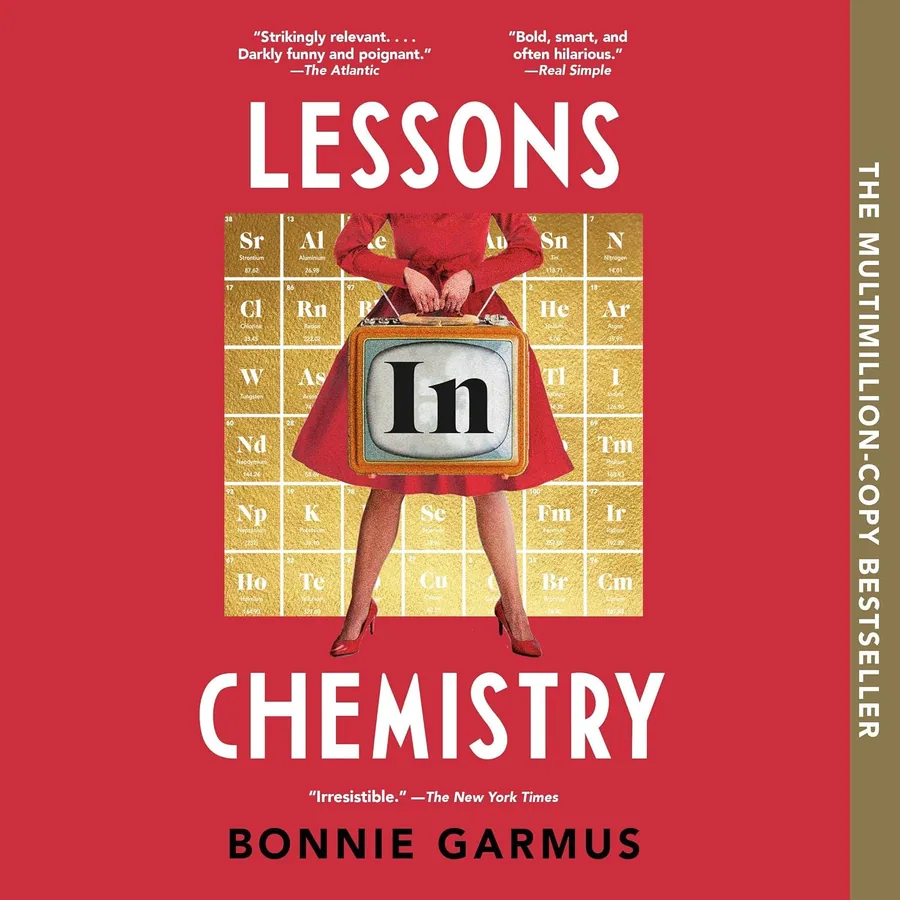
What carries this novel is Elizabeth Zott's voice, or really her refusal to bend it. She speaks in precise, literal sentences, treats stupidity as a chemical problem to be neutralized, and never once apologizes for taking up space. Garmus builds an entire comic engine out of the gap between how Elizabeth sees the world and how the world insists on seeing her. When she starts narrating her recipes as chemistry, naming the reactions instead of dumbing them down, it isn't a gimmick. She genuinely believes women deserve to be addressed as intelligent adults, and that small dignity becomes the book's emotional core.
The setup sounds almost too charming for its own good: brilliant chemist becomes reluctant cooking-show star. But Garmus uses that frame to smuggle in some genuinely sharp material about the casual cruelty of the era, the male colleagues who steal her work, the institutions that close doors, the assumption that a woman's mind is purely ornamental. The Calvin Evans romance early on is tender and specific, two awkward people who fall for each other's intelligence first and everything else second, and it gives the later grief real weight. I'll say it plainly: some of the plot turns go darker than the breezy jacket suggests, and a few readers come in expecting a light romp and get blindsided. Life turns hard on Elizabeth, and the novel doesn't flinch from how unfair it is.
The supporting cast is where Garmus's generosity shows. There's a dog named Six-Thirty whose interior life is rendered with surprising sweetness, a precocious daughter, a neighbor who slowly becomes family, and a producer who's smarter than he pretends. Six-Thirty's narration is the one element readers split hardest on. Some find his chapters the heart of the book, others find a dog's perspective a step too whimsical. I landed on the charmed side, but it's worth knowing the divide exists. The structure jumps around in time and point of view, which keeps the pacing brisk and lets backstory land exactly when it'll hurt or satisfy the most. It moves quickly without feeling thin.
Tonally, this is the trickiest thing to describe and the easiest to love. It's funny, often laugh-out-loud, but the comedy sits on top of real rage about how women were treated, and Garmus never lets you forget what's underneath the jokes. Readers who want fiction that's both entertaining and pointed, that earns its uplift rather than handing it over, will find plenty to dig into here. It's no accident this has become a book-club staple; it gives groups something genuine to disagree about.
Why you should read
- Voice-driven historical fiction with a fierce, funny heroine
- Book-club novels that mix humor with real social bite
- Readers drawn to early-'60s settings sharpened by wit and a feminist edge
- Anyone who wants an uplifting story that still carries real anger underneath
What to expect
- Readers who prefer flawed, ambiguous characters may find Elizabeth almost too consistently right and the villains too broadly drawn
- Six-Thirty's dog narration divides readers, and a few plot turns go darker than the light premise leads you to expect
- The plot delivers justice in satisfying but sometimes idealized ways; if you want gritty realism, the resolution may feel a touch convenient
If there's a fair caution, it's that Elizabeth can read as almost too perfect, always right, always one step ahead, the embodiment of an idea more than a flawed person. The villains tend toward cartoonish, and the world bends to deliver justice in ways that feel more wish-fulfilling than realistic. Readers who prize messy ambiguity and morally complicated characters may find the moral math a little tidy. But if you want a smart, big-hearted, righteously satisfying novel with a heroine you'll champion, that tidiness reads more like design than flaw.