Where to read or listen
- Is there an audiobook of The Nightingale?
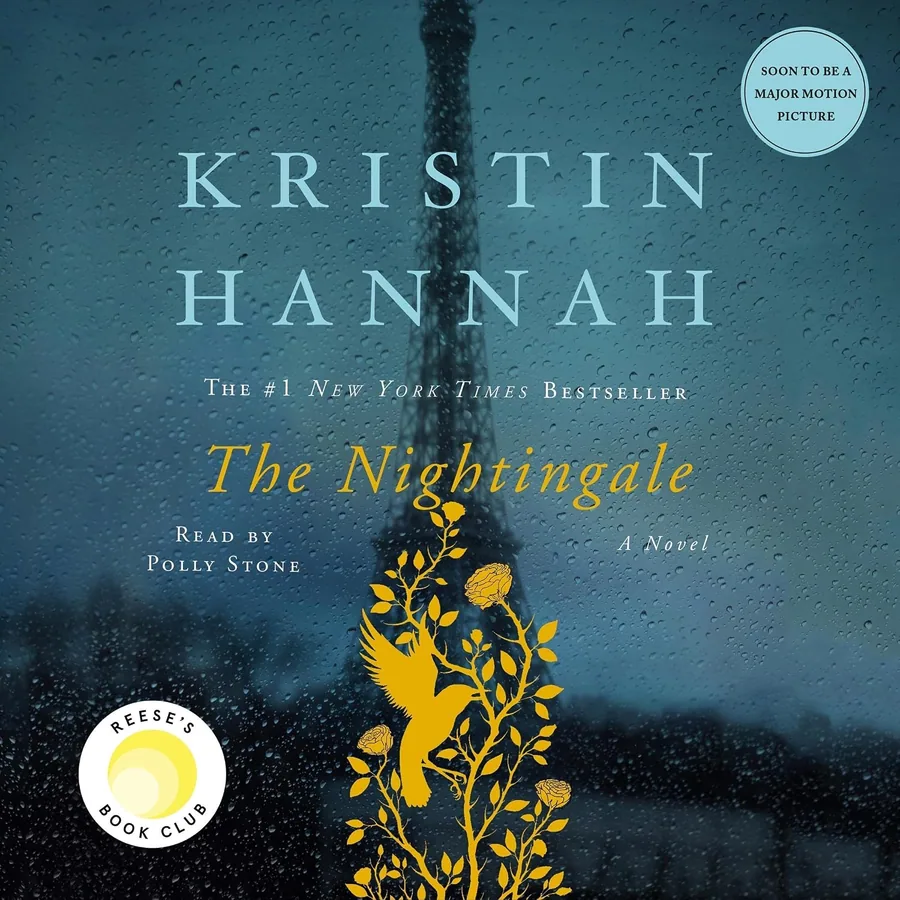
- Yes. The Nightingale has an Audible audiobook edition, narrated by Polly Stone.Listen free with Audible
We earn from qualifying Amazon purchases.
- How long is the The Nightingale audiobook?
- The The Nightingale audiobook runs 17 hr 19 min.
- Is The Nightingale on Kindle Unlimited?
- No. The Nightingale was not included with Kindle Unlimited when we last checked on October 9, 2026.
- What formats is The Nightingale available in?
- On Amazon, The Nightingale comes as a Kindle ebook, a paperback and a hardcover.
More by Kristin HannahSee every Kristin Hannah book we've reviewed, with our scores.All Kristin Hannah books →
Common questions
- What is The Nightingale about?
- The smartest thing Hannah does in The Nightingale is split her war between two temperaments. Vianne is the cautious older sister, a wife and mother who learns to resist by enduring, by keeping a household alive while a German officer is billeted under her roof. Isabelle is younger, reckless…
- Is The Nightingale worth reading?
- We scored The Nightingale 4.5 out of 5. Kristin Hannah's The Nightingale follows two French sisters through the German occupation of World War II, one resisting by enduring on the homefront, the other by running toward the underground. It's a big, unabashedly emotional historical novel for readers who want a survival…
Advertisement
More like this
Related books

Keeper of Lost Children
Sadeqa Johnson

The Survivors Guild
Gabriella Saab

The Calamity Club
Kathryn Stockett

The Help
Kathryn Stockett

Seeking Glory
Patricia Hamilton Shook

Road Trip
Mary Kay Andrews

Land
Maggie O'Farrell

The Bright Sword: A Novel of King Arthur
Lev Grossman

Homegoing
Yaa Gyasi

The Book Thief
Markus Zusak