Where to read or listen
- Is there an audiobook of The God of Small Things?
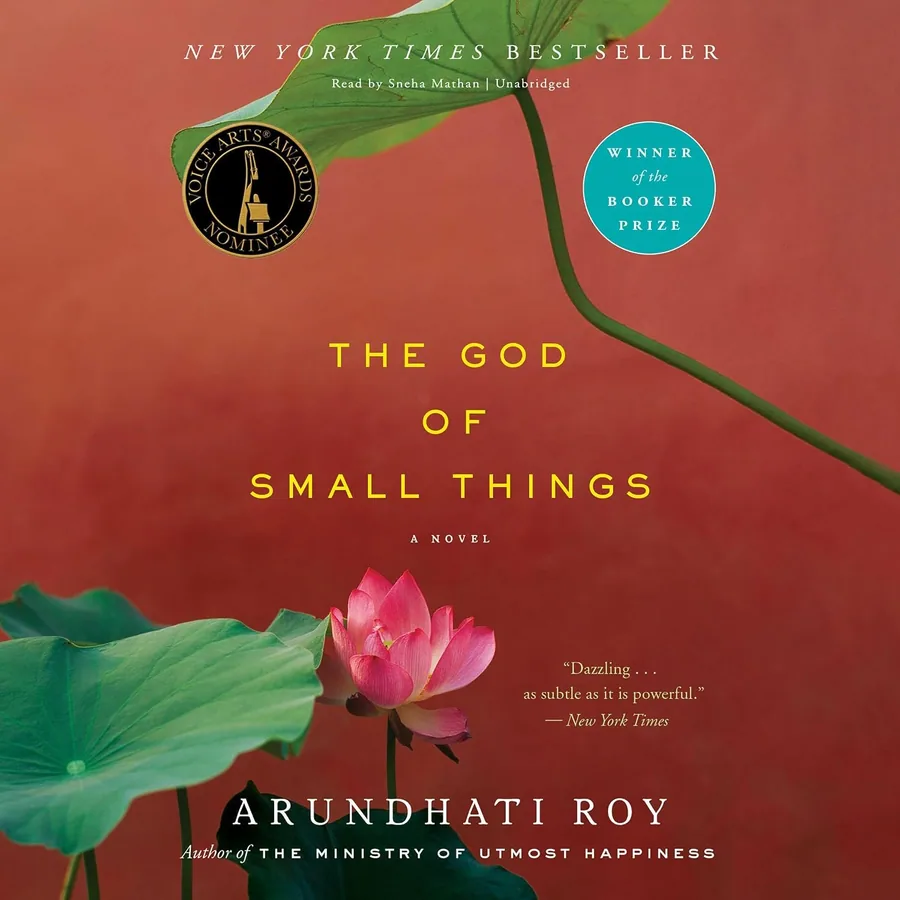
- Yes. The God of Small Things has an Audible audiobook edition, narrated by Sneha Mathan.Listen free with Audible
We earn from qualifying Amazon purchases.
- How long is the The God of Small Things audiobook?
- The The God of Small Things audiobook runs 11 hr 45 min.
- Is The God of Small Things on Kindle Unlimited?
- No. The God of Small Things was not included with Kindle Unlimited when we last checked on October 6, 2026.
- What formats is The God of Small Things available in?
- On Amazon, The God of Small Things comes as a Kindle ebook, a paperback and a hardcover.
On our listsBooks like The Book ThiefBooks like The Kite RunnerBooks like The Song of AchillesAll read-alike lists →
Common questions
- What is The God of Small Things about?
- The first thing you notice about The God of Small Things is the language, and the second thing you notice is that the language is doing the grief for you. Roy writes the way children think, bending words and repeating phrases until they take on a private weight, capitalizing the things that loom…
- Is The God of Small Things worth reading?
- We scored The God of Small Things 4.4 out of 5. Arundhati Roy's Booker-winning debut, The God of Small Things, follows seven-year-old twins Estha and Rahel through one catastrophic season in 1969 Kerala. It's a literary family saga and tragic love story told in fractured, spiraling prose for readers who want sentences that…
Advertisement
More like this
Related books

The Pirate Queen
Ariel Lawhon

My Friends
Fredrik Backman

There's Only One Sin in Hollywood: A Novel
Rasheed Newson

Kin: A Novel
Tayari Jones

The Keeper
Tana French

Exit Party
Emily St. John Mandel

Keeper of Lost Children
Sadeqa Johnson

Cool Machine
Colson Whitehead

We Burned So Bright
TJ Klune

John of John: A Novel
Douglas Stuart