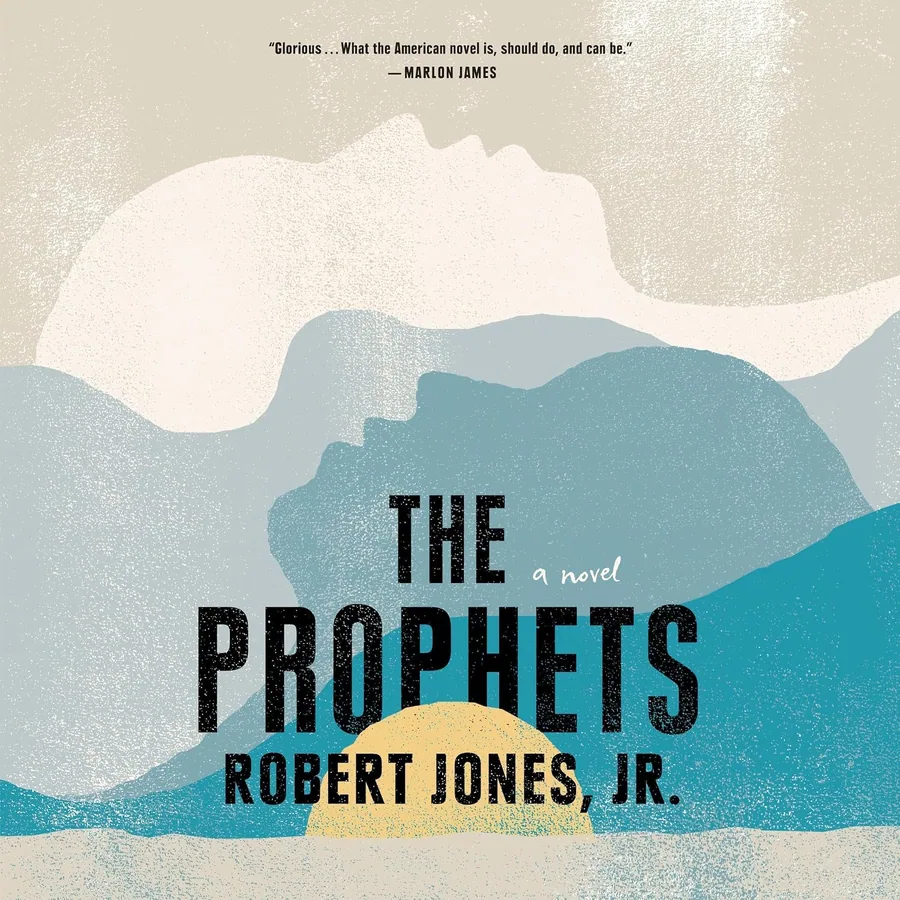
The Prophets opens in a register that signals exactly what kind of book it intends to be. Jones writes in a mode that owes something to Toni Morrison: incantatory, dense with feeling, willing to slow down and dwell inside a single body's grief or longing. The heart of the book is the bond between Isaiah and Samuel, two enslaved men who carve out a private tenderness in a barn. What struck me most is how Jones treats their love as ordinary and sacred at once. It isn't a subplot or a provocation. It's the still point the whole novel turns around, and the writing about their intimacy stays gentle in a way that feels almost defiant given everything pressing in on them.
The structure is choral rather than linear. Jones hands the narration around to the two men, to the women whose labor and remembering hold the place together, to the slaver, and to ancestral voices that reach back across an ocean and forward toward generations not yet born. That widening lens is the book's great gamble and its great strength. Instead of a tight story about two lovers, you get a meditation on inheritance: how cruelty gets passed down, how survival gets passed down, how a community can turn on its own under pressure. The betrayal that drives the plot arrives when an older enslaved man begins preaching the master's gospel, and the love between Isaiah and Samuel is suddenly recast as sin and threat. Faith becomes a weapon aimed at people who have already lost everything, and the novel lets you feel the quiet cruelty of that turn.
The prose rewards patience and punishes hurry. Jones favors metaphor stacked on metaphor, long interior passages, and a deliberate, almost liturgical rhythm. The scenes of physical and spiritual violence are rendered without flinching but never feel exploitative. They feel witnessed. The women in particular give the novel its spine. Their chapters carry a fierce, grounded knowledge that anchors the more cosmic stretches and keeps the book from floating off into pure abstraction.
This is a novel about pain, but pain isn't all it offers. Jones makes a real argument that love between two people can be a form of resistance, a refusal to be reduced, and that argument gives the suffering somewhere to go. By the time the book reaches its reckoning, the accumulated weight of all those voices lends the close a ceremonial force. It's historical fiction that wants to be felt in the body, not just understood.
Why you should read
- Readers who love Toni Morrison's dense, incantatory prose
- Fans of choral, multi-voice literary fiction
- Anyone seeking Black and LGBTQ historical fiction with serious craft
- Readers who prize lyrical language and emotional depth over fast plotting
What to expect
- The shifting perspectives and slow, interior passages make for a demanding read; readers who want a tightly plotted, momentum-driven story may find the pacing heavy
- The mythic and ancestral sections can feel abstract, and some readers reported losing track of who's narrating from chapter to chapter
Fair warning about fit. The narrative shifts perspective often, and many readers say the same thing: the lyricism that makes The Prophets soar also makes it slow, especially through the middle. If you want momentum over mood, the pacing may test you. A separate caution worth naming, because reviewers raise it too: the mythic and ancestral passages can read as abstract or hard to track, and some people found themselves losing the thread of who is speaking and when. This is a book to sink into rather than race through, and it asks for that surrender up front.