Where to read or listen
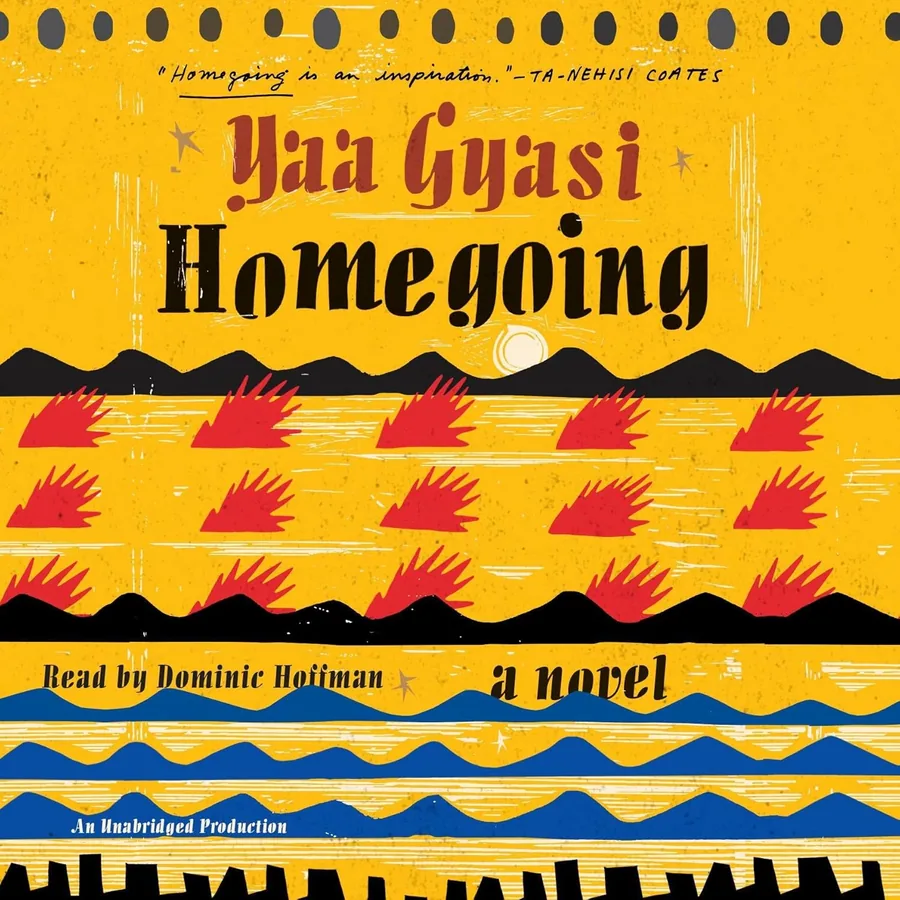
- Is there an audiobook of Homegoing?
- Yes. Homegoing has an Audible audiobook edition, narrated by Dominic Hoffman.Listen free with Audible
We earn from qualifying Amazon purchases.
- How long is the Homegoing audiobook?
- The Homegoing audiobook runs 13 hr 11 min.
- Is Homegoing on Kindle Unlimited?
- No. Homegoing was not included with Kindle Unlimited when we last checked on October 4, 2026.
- What formats is Homegoing available in?
- On Amazon, Homegoing comes as a Kindle ebook, a paperback and a hardcover.
Common questions
- What is Homegoing about?
- What strikes you first about Homegoing is its architecture. Gyasi gives each chapter to a single descendant, alternating between the two family lines, so the book reads almost like a collection of linked short stories. Effia marries an Englishman and lives above the dungeons at Cape Coast Castle…
- Is Homegoing worth reading?
- We scored Homegoing 4.5 out of 5. Yaa Gyasi's Homegoing follows two half sisters in eighteenth-century Ghana and the eight generations that branch out from them, one line through slavery and America, the other staying behind on the Gold Coast. It's historical fiction built like a relay race, and it carries…
Advertisement
More like this
Related books

All the Light We Cannot See
Anthony Doerr

Keeper of Lost Children
Sadeqa Johnson

Land
Maggie O'Farrell

The Bright Sword: A Novel of King Arthur
Lev Grossman

A Game of Thrones
George R. R. Martin

The Nightingale
Kristin Hannah

A Rumor of War
Philip Caputo

The Book Thief
Markus Zusak

A Gentleman in Moscow
Amor Towles

Lone Survivor: The Eyewitness Account of Operation Redwing and the Lost Heroes of SEAL Team 10
Marcus Luttrell