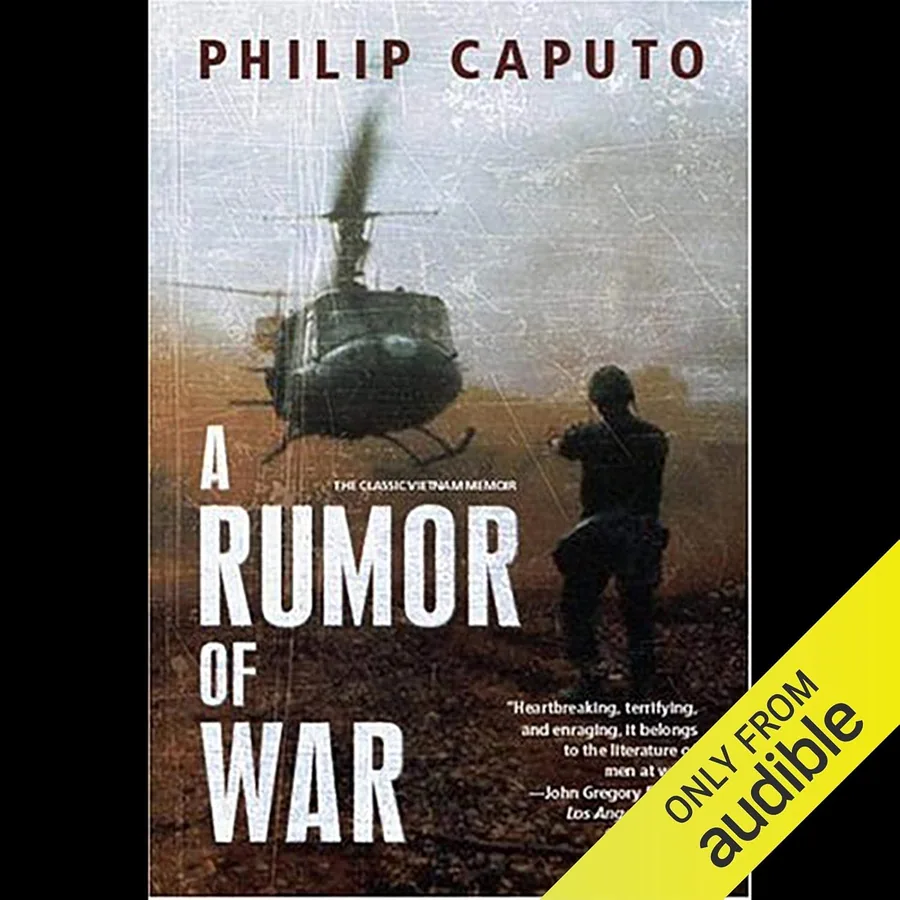
Caputo wrote this a decade after the war, and the distance shows in the best way. He can render a firefight with concrete, almost tactile detail, then step back and ask the harder question of what it meant, without ever sliding into sermon. The memoir moves from the eager enlistment and training, where he writes about wanting the war the way young men want a test they're sure they'll pass, through the long grind of patrols and rot in the bush, where the enemy is mostly a rumor and the real adversaries are heat, fear, boredom, and the slow accumulation of dead friends. The final stretch, circling the charges he faced, is where the book stops being a war story and becomes a moral inquiry. He never lets himself off the hook.
The prose endures because of its restraint. The landscape itself reads as an antagonist: indifferent green, the mud, the constant wet. So does the steady drumbeat of casualties, named and mourned, that turns abstract policy into specific loss. Caputo is honest about the strange exhilaration of combat alongside its horror, and that ambivalence is exactly what gives the book its credibility. His sentences are clean and muscular, more reportorial than lyrical, though he reaches for something closer to poetry at the right moments. There's a discipline to how he withholds; he trusts the facts of a body, a smell, a wrecked village to carry the weight, and they do.
The argument underneath the story is quiet but firm. Caputo isn't writing geopolitics; he's writing about how war corrodes the men who fight it, regardless of the rightness of the cause. He's interested in the gap between the idealism that sends young people to war and the reality that meets them there. He's also clear-eyed about the machinery that produced it: the body-count metrics, the pressure to show progress, the way an institution can quietly license its own people to cross lines they once thought uncrossable. By the final pages, you understand something durable about how atrocity happens, not because monsters do it but because exhausted, frightened, grieving people do. Reviewers have called the book dangerous and subversive, and I think the danger is precisely this: it forces you to ask what you would have done, and to distrust your own answer.
What makes it last beyond its moment is that Caputo refuses the easy redemption arc. There's no clean lesson at the end, no version of himself who emerges wiser and whole. He came home physically intact and inwardly hollowed, and he writes that hollowing without self-pity, which is rarer and harder than it sounds. The book earns its place beside the poetry of the First World War because it's after the same thing: the truth about what gets asked of the young and what it costs them.
Why you should read
- Readers of Tim O'Brien's The Things They Carried and Michael Herr's Dispatches
- Anyone wanting the firsthand Vietnam memoir that set the template
- Readers willing to sit with hard moral questions rather than clean heroics
What to expect
- This is not a fast-moving narrative. A fair number of readers note that the middle drags, with long stretches of waiting and dread between the violence, so anyone after sustained action may lose patience
- The combat and atrocity are rendered without flinching; readers who are squeamish should know going in
If you've read Tim O'Brien or Michael Herr and want the ground-level memoir that came first, this is the source. Come away from it and you won't have a tidy thesis about Vietnam. What you'll have instead is a felt understanding of what the war did to one intelligent young man, and through him, to a generation. More than forty years on, it has lost none of its force.