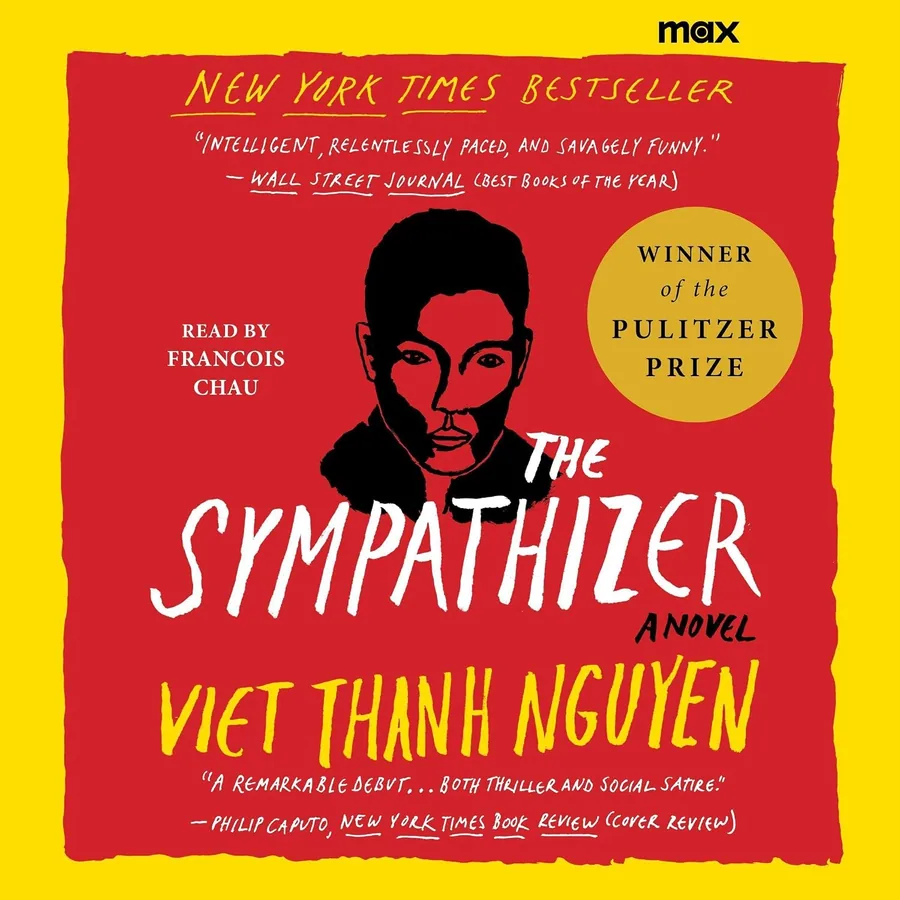
The voice arrives before anything else does. Nguyen's narrator, a half-French, half-Vietnamese captain working as a double agent, opens with the declaration that he can see every issue from both sides, and that confession sets the terms for everything that follows. The whole novel is framed as his written testimony, which gives the prose a confessional pressure — funny, mortified, self-lacerating, and dazzlingly intelligent all at once. He's the kind of narrator who can describe a humiliating dinner party and a political assassination with the same arched eyebrow. If you read for voice, this is one of the great recent ones.
The shape of the story moves from the chaotic last hours before the Fall of Saigon to the strange purgatory of refugee life in Southern California, then back toward Asia and a reckoning that turns the book inside out. Along the way it works genuinely as a thriller — there's surveillance, betrayal, a killing that haunts the back half — but Nguyen keeps undercutting the genre machinery with satire. A long sequence about the narrator consulting on a bombastic Hollywood war movie is the comic centerpiece, and it doubles as a furious essay on who gets to tell whose suffering. The book wants you to feel entertained and implicated at the same time.
What makes it land emotionally is the friendship at its center. The narrator is bound to two blood brothers from boyhood, and the impossible loyalties between them — to ideology, to country, to each other — become the engine that drives the final act toward something close to tragedy. Nguyen is writing about divided selves, but he never lets the theme float free of feeling. The cost of being a man with no single home, no clean allegiance, accumulates until it nearly breaks the narrator, and the reader feels every increment.
Fair warning about the prose: it's dense, allusive, and unafraid of the long, looping sentence. Nguyen layers irony on irony, and the narrator's intellect can run hot enough to slow the momentum, especially in the middle stretch. Readers who picked this up expecting a lean spy novel may find the philosophical digressions and political monologues demanding. The final movement also turns deliberately disorienting and brutal — it earns its difficulty, but it isn't a comfortable ride to the exit. This is literary fiction first and a thriller second, and going in with that expectation makes all the difference.
Why you should read
- Readers who love a strong, ironic, confessional first-person voice
- Fans of literary fiction that doubles as biting political satire
- Anyone wanting the Vietnam War told from a Vietnamese perspective
- Book clubs ready to argue about loyalty, identity, and complicity
What to expect
- Readers wanting a fast, plot-forward spy thriller may find the dense prose and long digressions slow going
- The final section turns dark and intentionally disorienting; not for readers seeking a comfortable resolution
What stays with you is how completely Nguyen reorients the camera. The American Vietnam War story usually centers American grief; this one refuses that frame entirely, and does it with wit sharp enough to draw blood. It's a coming-to-consciousness story about a man learning the price of seeing too clearly, and it's one of the most original American novels of the last decade. Demanding, yes. Worth the demand, absolutely.