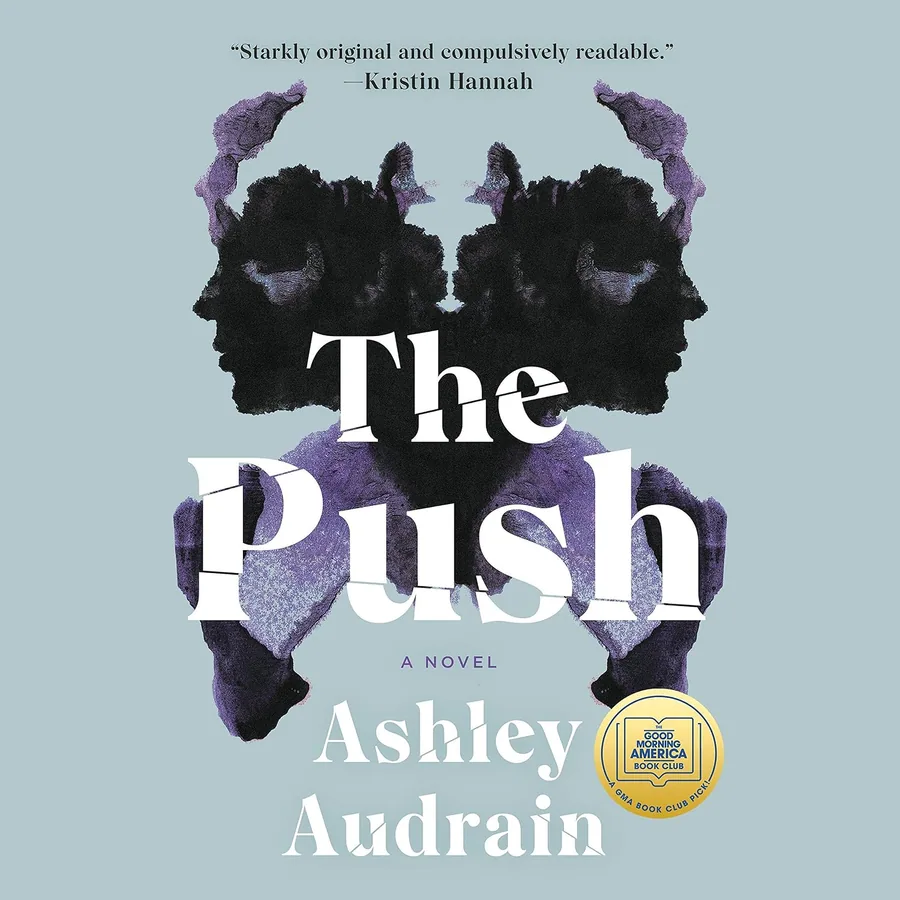
What stayed with me about The Push is the voice. Blythe narrates much of the book in second person, speaking directly to her husband, and the effect is closer to a wound than a story. You're dropped inside an argument she's still having, a marriage being recounted by someone who needs you to understand her side before she's finished losing it. Audrain trusts that intimacy completely, and it gives the novel a confessional ache that an ordinary first-person account wouldn't deliver.
The premise is deceptively domestic. Blythe wants to be the warm mother she never had, and instead she finds herself frightened of her own infant daughter, Violet, who never quite warms to her. Her husband reassures and dismisses in equal measure, and the engine of the book becomes that widening gap between what Blythe sees and what she's told she sees. Audrain folds in a second, generational thread about Blythe's own mother and grandmother, and those interludes are some of the strongest writing here. They turn the question of nature versus nurture into something that feels inherited, almost cursed, passed down through women who were failed before they could fail anyone else.
The pacing is patient at first and then tightens like a fist. This isn't a thriller built on cliffhangers so much as on accumulating dread, small deniable moments that stack up until you can't dismiss them either. When the devastating turn comes, it lands hard precisely because Audrain spent so long making you doubt. The chapters are short and the prose is spare, so the book moves quickly, but the emotional weight is heavy. It keeps asking uncomfortable things: what we owe our children, what motherhood is allowed to feel like, what happens to a woman when no one believes her.
There's a craft choice worth flagging too. Audrain rarely lets Blythe off the hook, and she rarely lets us off either. The second-person address means you're cast as Fox, the husband who shrugs off her fears, which puts the reader in the uneasy position of being both confided in and accused. That's a bold thing to do to an audience, and it's a big part of why the book stays with you after the plot resolves.
A fair warning, though. That patient first half is exactly where some readers drift. The slow build is the point, but if you want momentum early, the long stretch of domestic unease before the story turns can feel like waiting. And the ending divides people. Audrain refuses to fully resolve whether Blythe is a reliable witness, which thrilled some readers and frustrated others who wanted the floor to stop shifting. There's also no character here you're invited to simply root for, which is deliberate but airless if you read for warmth.
Why you should read
- Readers who like ambiguous, debatable narrators they can argue about afterward
- Fans of slow-burn domestic dread over plot-driven suspense
- Book clubs that don't mind leaving a discussion unresolved
- Anyone drawn to unflinching portraits of motherhood and inherited trauma
What to expect
- Content warning: the book centers on a tragedy involving a young child and offers little comfort or redemption
- Readers who want forward momentum may find the first half slow, and the deliberately unresolved ending leaves some feeling cheated rather than haunted
If you read for emotional intensity and hard questions rather than comfort, The Push delivers a lot in a small space. It's a natural pick for book clubs willing to sit in discomfort, and a strong fit for anyone drawn to unsettling stories about mothers, daughters, and the stories families tell to survive themselves.