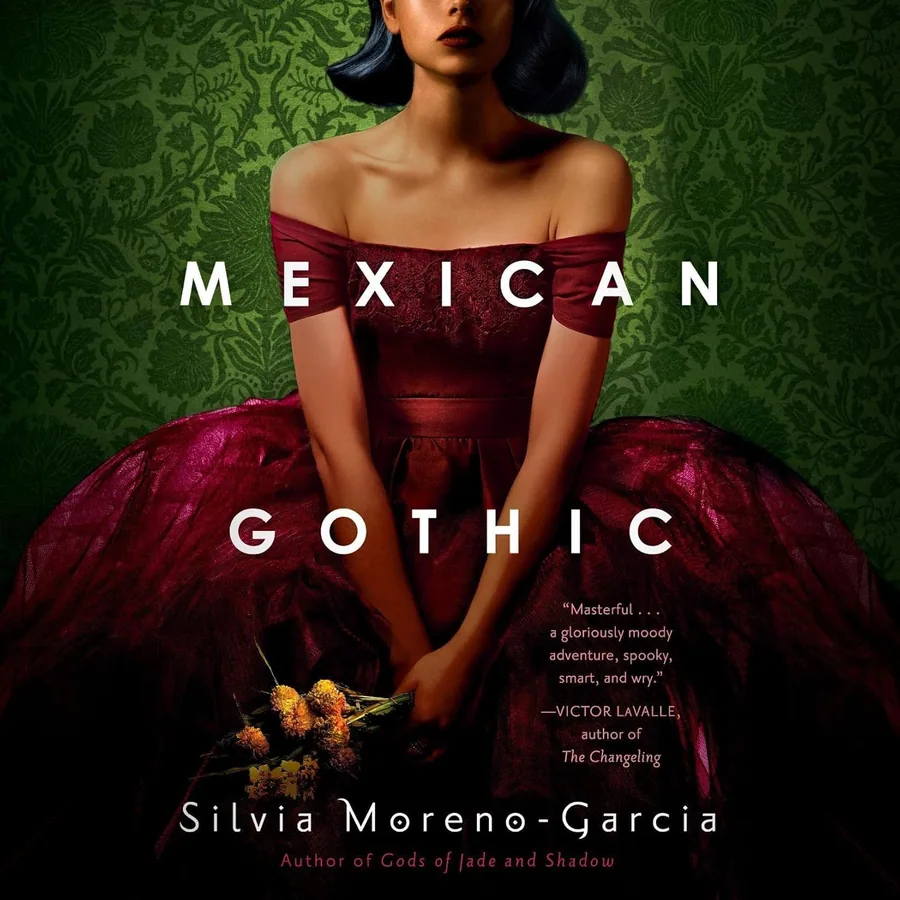
There's a particular pleasure in watching a heroine who refuses to be cowed. Noemí Taboada arrives at High Place in chic dresses and red lipstick, expecting to manage a delicate family problem with charm and cigarettes, and the house promptly sets about unsettling everything she believes about reason and control. Moreno-Garcia builds her on purpose as the wrong kind of Gothic protagonist: not a trembling waif but a willful, slightly spoiled debutante who treats dread as a problem to be argued with. That friction between her modern confidence and the mansion's ancient pull is the engine of the whole book.
The pacing is deliberate, and you should know that going in. The first third is mostly atmosphere and unease: oppressive dinners with the Doyle family, a patriarch who studies Noemí like a specimen, a husband who is charming until he isn't, and a cousin who's clearly fading. Moreno-Garcia lets the dread accumulate through repetition, the cold and the silence and the strange dreams that arrive with the texture of memory rather than nightmare. This is exactly where the book splits its readers. Plenty find the early going hypnotic; plenty more find it a slog and say so, and I won't pretend the slow stretch always justifies itself. But when the book finally tips its hand, the horror turns genuinely strange and physical, and the imagery of mold, mushrooms, and decay becomes something far more disturbing than set dressing.
What I admire most is how the book braids its scares with real ideas. This is a horror story about colonialism, eugenics, and the rot under inherited wealth. The Doyles are an English family who came to Mexico to mine silver and never let go of their sense of superiority, and the house's sickness is inseparable from their belief in bloodline and purity. There's a scene late on where the family's reverence for their lineage curdles into something parasitic, and the book makes you feel how the worship of pure blood and the literal contagion in the walls are the same horror wearing two faces. That's part of why the final act lands harder than a conventional haunted-house climax would.
The prose is lush and sensory, leaning into the Gothic tradition it's playing with. Moreno-Garcia clearly knows her Brontës, but she's doing something nastier with them, turning the brooding manor into a body that's gone septic. There's a cosmic strangeness here too, the sense of a wrongness too large to fully see, except the contempt usually pointed at outsiders gets aimed squarely at the colonizers instead. Some of the supporting characters stay thinner than Noemí. The menacing father and the gentle younger son work better as forces than as fully rounded people. And the climax, once it commits, moves into territory weird enough that a few readers will find it tips past their tolerance for the surreal. But the throughline of Noemí's nerve holds it all together.
Why you should read
- Readers who love atmospheric, slow-burn Gothic in the brooding-manor tradition of Rebecca and Jane Eyre
- Fans of grotesque, biological horror and uncanny fungal imagery that builds rather than jump-scares
- Anyone who wants horror with real thematic teeth: colonialism, eugenics, inherited rot
- Readers craving a sharp, willful heroine instead of a passive Gothic victim
What to expect
- The first third is deliberately slow and atmosphere-heavy; this is the book's most common sticking point, and impatient readers may bounce off before the payoff
- The climax goes surreal and grotesque enough that some readers will find it tips past their comfort with the bizarre
- Supporting characters stay thinner than Noemí, working more as forces than as fully drawn people
If you come for a tidy whodunit you'll be in the wrong house. This is mood-first horror that asks you to sink into its damp, suffocating world before it shows you what it really is. For readers who love atmospheric Gothic, horror that's grotesque and biological and unafraid of its own ideas, and a heroine worth following into the dark, the payoff is worth the wait.