Where to read or listen
- Is there an audiobook of The Millionaire Next Door?
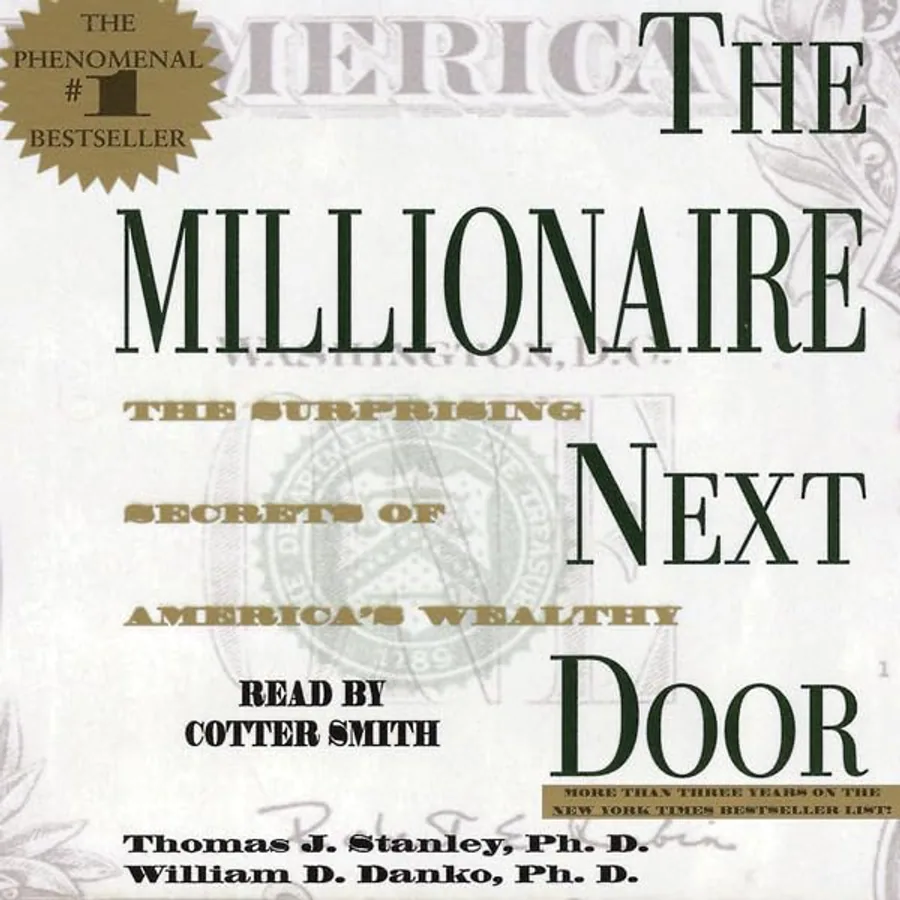
- Yes. The Millionaire Next Door has an Audible audiobook edition, narrated by Cotter Smith.Listen free with Audible
We earn from qualifying Amazon purchases.
- How long is the The Millionaire Next Door audiobook?
- The The Millionaire Next Door audiobook runs 8 hr 16 min.
- Is The Millionaire Next Door on Kindle Unlimited?
- No. The Millionaire Next Door was not included with Kindle Unlimited when we last checked on October 21, 2026.
- What formats is The Millionaire Next Door available in?
- On Amazon, The Millionaire Next Door comes as a paperback and a hardcover.
Common questions
- What is The Millionaire Next Door about?
- We tend to assume wealth looks like wealth: the luxury car, the big house, the conspicuous spending. The Millionaire Next Door, the product of years of surveys and interviews with America's affluent, makes the bracing argument that the opposite is usually true. The people quietly sitting on seven…
- Is The Millionaire Next Door worth reading?
- We scored The Millionaire Next Door 4.4 out of 5. The Millionaire Next Door upends what we picture when we hear the word 'millionaire.' Drawing on years of research, Stanley and Danko show that the truly wealthy are usually the unflashy neighbor in the modest house, and that the habits behind their fortunes are almost boringly…
Advertisement
More like this
Related books

The Simple Path to Wealth: Your Road Map to Financial Independence and a Rich, Free Life
JL Collins

I Will Teach You to Be Rich: No Guilt. No Excuses. Just a 6-Week Program That Works (Second Edition)
Ramit Sethi

Rich Dad Poor Dad: What the Rich Teach Their Kids About Money That the Poor and Middle Class Do Not!
Robert T. Kiyosaki

Rich Dad's CASHFLOW Quadrant: Rich Dad's Guide to Financial Freedom
Robert T. Kiyosaki

Your Money or Your Life: 9 Steps to Transforming Your Relationship with Money and Achieving Financial Independence: Fully Revised and Updated for 2018
Vicki Robin

The Reverse Centaur's Guide to Life After AI: How to Think About Artificial Intelligence—Before It's Too Late
Cory Doctorow

Billion Dollar Whale: The Man Who Fooled Wall Street, Hollywood, and the World
Bradley Hope & Tom Wright

The 4-Hour Workweek, Expanded and Updated: Expanded and Updated, With Over 100 New Pages of Cutting-Edge Content.
Timothy Ferriss

The Soul of A New Machine
Tracy Kidder

Salt Sugar Fat: How the Food Giants Hooked Us
Michael Moss