Where to read or listen
- Is there an audiobook of The Lean Startup?
- Yes. The Lean Startup has an Audible audiobook edition, narrated by Eric Ries.Listen free with Audible
We earn from qualifying Amazon purchases.
- Is The Lean Startup on Kindle Unlimited?
- No. The Lean Startup was not included with Kindle Unlimited when we last checked on October 10, 2026.
- What formats is The Lean Startup available in?
- On Amazon, The Lean Startup comes as a Kindle ebook, a paperback and a hardcover.
Common questions
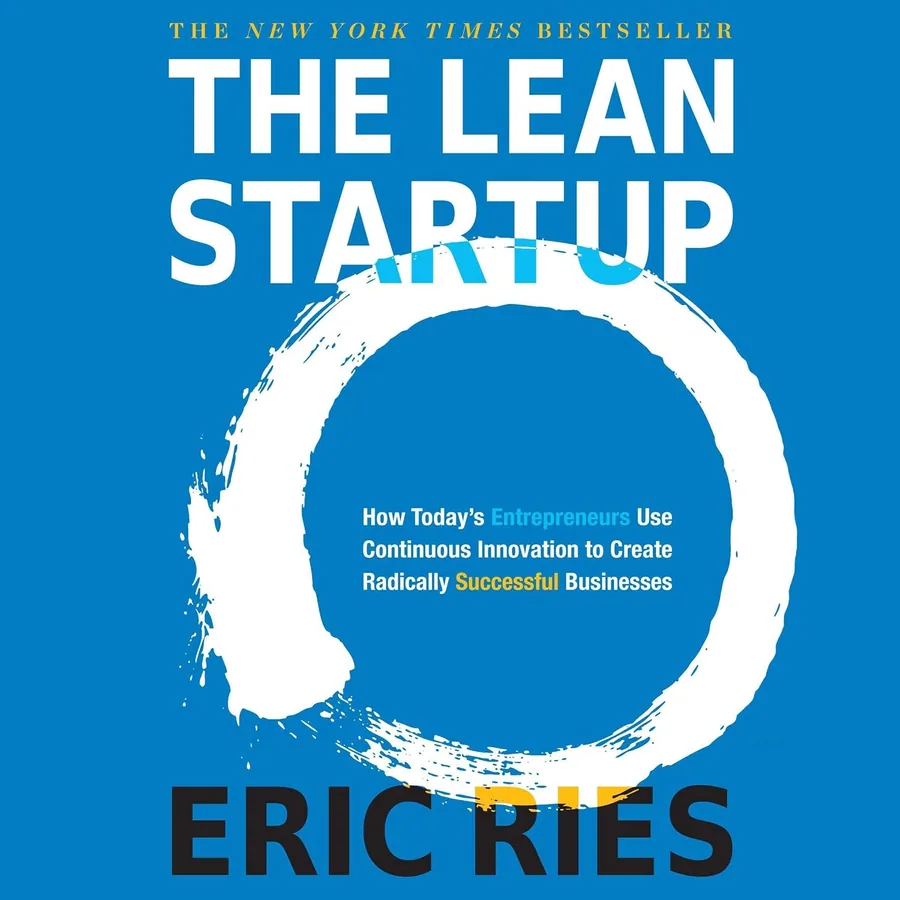
- What is The Lean Startup: How Today's Entrepreneurs Use Continuous Innovation to Create Radically Successful Businesses about?
- The argument at the center is deceptively simple. A startup, Ries says, is an engine for learning under uncertainty, and most waste enormous effort executing a vision they never bothered to check against reality. He borrows from lean manufacturing and the scientific method to propose a tighter…
- Is The Lean Startup: How Today's Entrepreneurs Use Continuous Innovation to Create Radically Successful Businesses worth reading?
- We scored The Lean Startup: How Today's Entrepreneurs Use Continuous Innovation to Create Radically Successful Businesses 4.6 out of 5. Eric Ries's The Lean Startup is a business book for founders and intrapreneurs that reframes building a company as a series of experiments rather than a bet on one grand plan. If you've ever burned months perfecting a product nobody asked for, it offers a disciplined…
Advertisement
More like this
Related books

Disrupting the Game: From the Bronx to the Top of Nintendo
Reggie Fils-Aime

The Big Short: Inside the Doomsday Machine
Michael Lewis

Range: Why Generalists Triumph in a Specialized World
David Epstein

Moneyball: The Art of Winning an Unfair Game
Michael Lewis

Influence: The Psychology of Persuasion
Robert B. Cialdini

The Reverse Centaur's Guide to Life After AI: How to Think About Artificial Intelligence—Before It's Too Late
Cory Doctorow

Billion Dollar Whale: The Man Who Fooled Wall Street, Hollywood, and the World
Bradley Hope & Tom Wright

The 4-Hour Workweek, Expanded and Updated: Expanded and Updated, With Over 100 New Pages of Cutting-Edge Content.
Timothy Ferriss

The Simple Path to Wealth: Your Road Map to Financial Independence and a Rich, Free Life
JL Collins

I Will Teach You to Be Rich: No Guilt. No Excuses. Just a 6-Week Program That Works (Second Edition)
Ramit Sethi