Where to read or listen
- Is there an audiobook of The Hunger Games?
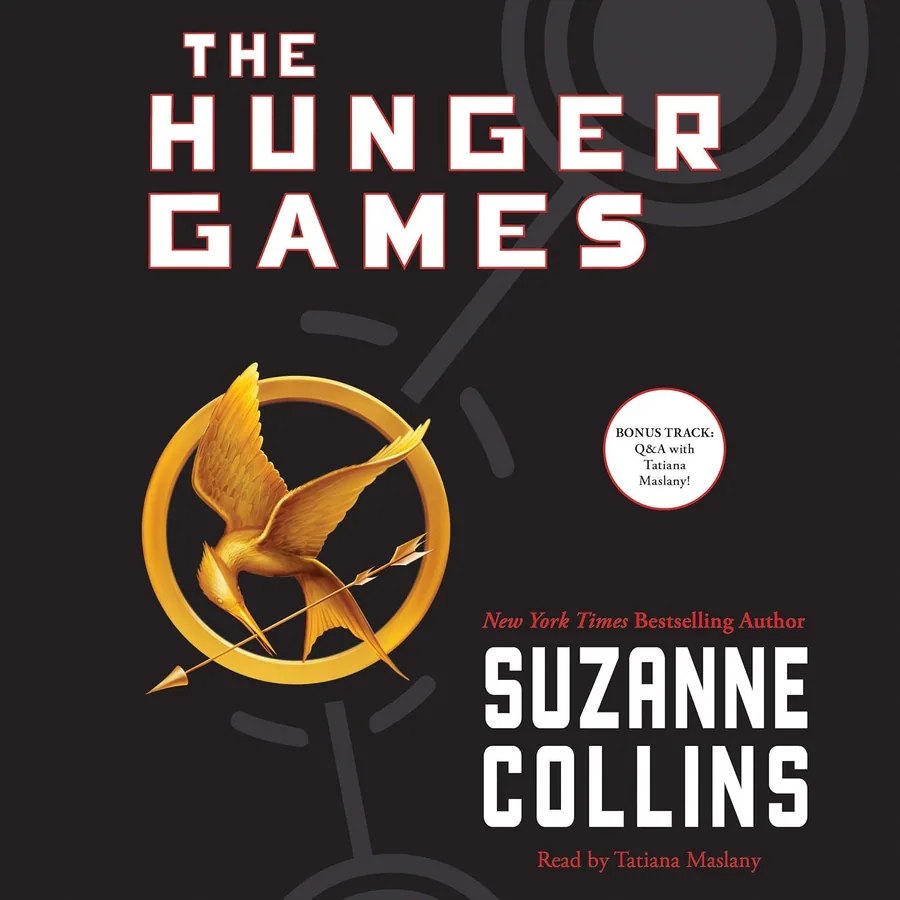
- Yes. The Hunger Games has an Audible audiobook edition, narrated by Tatiana Maslany.Listen free with Audible
We earn from qualifying Amazon purchases.
- How long is the The Hunger Games audiobook?
- The The Hunger Games audiobook runs 10 hr 35 min.
- Is The Hunger Games on Kindle Unlimited?
- No. The Hunger Games was not included with Kindle Unlimited when we last checked on October 14, 2026.
- What formats is The Hunger Games available in?
- On Amazon, The Hunger Games comes as a Kindle ebook, a paperback and a hardcover.
More by Suzanne CollinsSee every Suzanne Collins book we've reviewed, with our scores.All Suzanne Collins books →
Common questions
- What is The Hunger Games about?
- What makes Panem stick isn't the lore. It's the logic. Collins sets a rule, then follows every cruel implication until the world feels airtight. The Capitol controls the districts through spectacle and scarcity, and you understand exactly how that works because Katniss understands it from the…
- Is The Hunger Games worth reading?
- We scored The Hunger Games 4.6 out of 5. Suzanne Collins built a dystopia that runs on a single brutal premise: every year each district must surrender two of its children to a televised fight to the death. The Hunger Games turns that horror into a lean survival story narrated by a girl who refuses to perform her own…
Advertisement
More like this
Related books

The Maze Runner (The Maze Runner, Book 1)
James Dashner

Divergent (Divergent Trilogy, Book 1)
Veronica Roth

The Giver (Giver Quartet, Book 1)
Lois Lowry

Shatter Me: A Journey of Strength and Rebellion Against a Dictatorship
Tahereh Mafi

Firekeeper's Daughter
Angeline Boulley

Wool
Hugh Howey

1984
George Orwell

The Fault in Our Stars
John Green

Release Me
Tahereh Mafi

Parable of the Sower
Octavia E. Butler