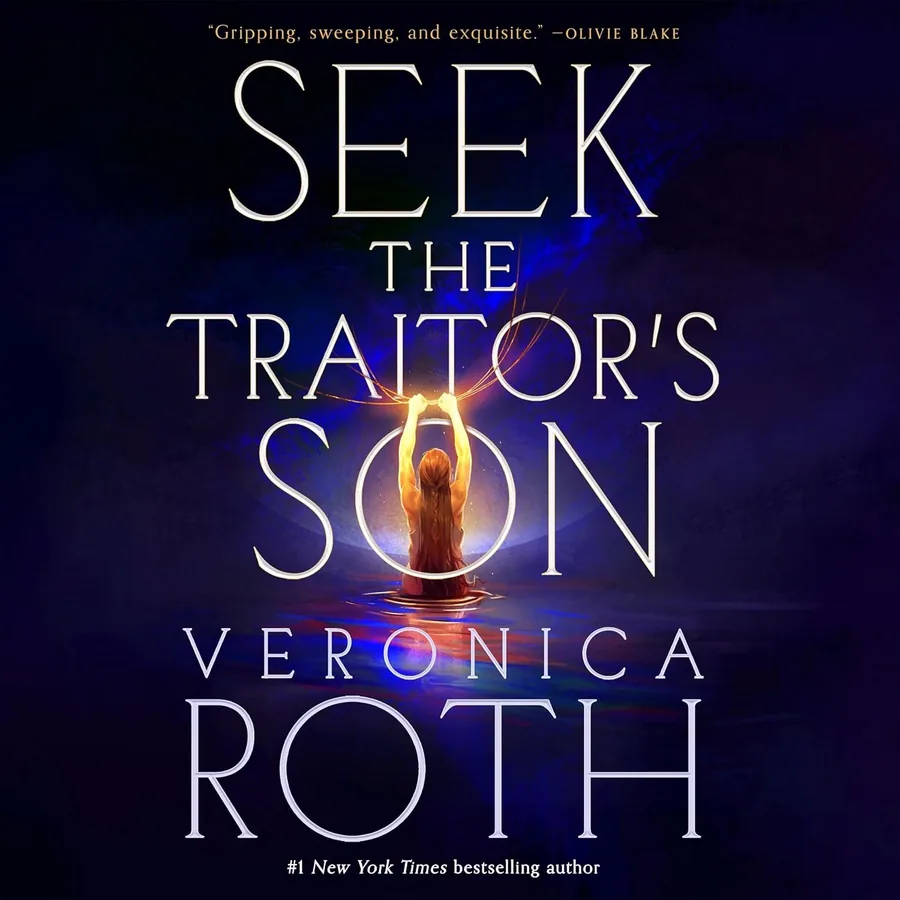
The setup is elegant in its cruelty. Two soldiers are summoned together to hear a prophecy that names them both. One defends a small nation. One is a general from the empire bearing down on it. Someone will win. Someone will lose. And somewhere in the gap between those outcomes, love will happen. The prophecy won't say who falls for whom or who walks away the victor. It just drops those two facts in the room and leaves both women to live inside the not-knowing. Roth doesn't treat that as a clever gimmick. She treats it as the emotional weather of the whole book, and it colors everything after.
Elegy Ahn is a soldier before she's anything else, and Roth lets that identity do real work before the prophecy takes it apart. She isn't a reluctant hero secretly aching for adventure. She found meaning in a defined role, and now she has to figure out who she is once that role is stripped from her in a single afternoon. That interiority is what gives the romantic tension a place to live. The friction runs deeper than desire against duty. It's agency against fate. Is she moving toward the man the prophecy names because she wants him, or because she was told she would? The book refuses to answer cleanly, and that refusal is the point.
The Talusar empire is built around a Fever that kills half the people it touches and hands the other half strange gifts. Roth does something smart with that mythology: she makes the worship of the Fever feel coherent instead of cartoonishly monstrous. And General Rava Vidar, Elegy's opposite number across the line, is a real adversary with her own logic and her own stakes. That turns the coming collision into something shaped like tragedy rather than a clean good-versus-evil showdown. Going by what the premise lays down, these are two people who are both right, both wrong, and both caught.
This is a series opener, and it spends its weight on world-building and setup. If you like your emotional escalation fast, the romance here gathers more slowly than you may want. That's a deliberate call. The anticipation is the dish Roth is cooking, and she earns it by making the uncertainty feel meaningful rather than merely stretched out. Still, the real payoff is clearly being saved for later volumes, so go in knowing the heat is a slow build.
Why you should read
- Romantasy readers drawn to enemies-to-lovers with genuine political stakes
- Slow-burn romance where the emotional buildup is the point
- Readers who enjoy dual-nation world-building with moral complexity
- Dystopian fantasy fans comfortable with series-length payoffs
What to expect
- Deliberate, world-building-heavy pacing in this first installment
- A slow-burn romance with emotional payoff deferred across the series
- Dual-nation political tension woven into the love story
- A prophecy structure that functions as sustained psychological suspense
What stays with you is how much sharper the central question is than it first looks. A prophecy that names the outcome but not the recipient isn't a comfort. It's a kind of psychological warfare, and it works on you exactly the way it works on Elegy. Roth knows that, and she uses it to keep both her heroine and her reader in a state of productive unease. The romance earns its weight precisely because it arrives under that pressure.