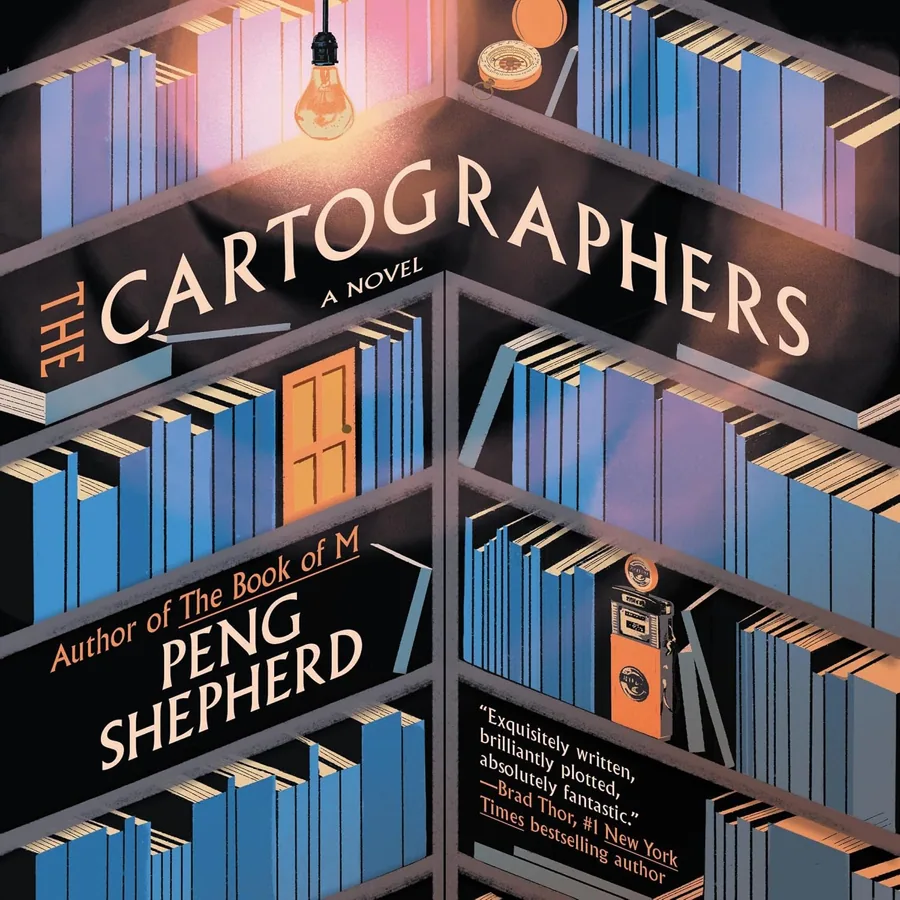
The setup sounds small. A disgraced cartographer named Nell loses her father, finds a cheap highway map among his belongings, and realizes it's the same map that ended her career years ago. Shepherd has a real talent for making the small feel enormous. The question driving the book, what a map is actually for, turns out to have an answer with consequences, and the slow uncovering of it is where the novel earns its keep. This is speculative fiction built on a single elegant idea, and for a good stretch the idea holds its shape.
Structurally, the story braids two timelines. There's Nell's present-day investigation, part academic puzzle and part quiet thriller. And there's a long flashback narrated by the friends who knew her parents when they were young, broke, and certain they were on the edge of something. That older thread is the heart of the book. It reads like a story told around a table by people who loved each other and then lost each other, and Shepherd lets the warmth and the dread sit together. If you came for the magic of maps, what you'll actually get is a story about ambition, grief, and the things people do to keep a discovery for themselves.
The worldbuilding is grounded in a way I appreciated. Shepherd treats cartography as a genuine craft with real history, and the fantastical element grows out of that craft instead of being bolted on. She handles the central conceit carefully, so when the rules of how it works click into place, the payoff lands. That matters in a book asking you to believe something extraordinary about a printed object. For most of the way, the internal logic earns the leap.
Where the book wobbles is the present-day frame. Nell is a sturdy guide but not always a vivid one, and the thriller machinery, the shadowy collector, the deaths, the chase, sometimes feels dutiful rather than urgent. And the ending is where reception splits hardest. Plenty of readers feel the final act stops to explain itself at length, draining the tension just as it should peak, and the magic gets pinned down in a way that feels more tidy than wondrous. If you want a fast, tightly wound thriller, this isn't quite that. The flashbacks also circle back to similar emotional notes more than once. Treat it as a literary mystery with a fantastical core and you'll set your expectations right.
Why you should read
- Readers who like bookish, idea-first speculative fiction where the premise matters more than the action
- Anyone drawn to maps, archives, libraries, and the romance of obsessive scholarship
- Fans of mysteries that turn on a found object and a buried family history
What to expect
- Readers wanting a fast, tightly wound thriller will likely find the present-day chase slack
- The ending leans heavily on explanation, and many reviewers found it a letdown after the buildup; the flashbacks also retread similar emotional ground
Even so, this is a book worth pressing on the right reader. It's for people who love the idea that knowledge can be dangerous, that a place can be invented and then somehow become real. Shepherd writes with curiosity and care, and the friendship at the center, the one that built something it couldn't control, stayed with me longer than the plot mechanics did. The wonder is genuine; just don't expect the ending to match the slow burn that earns it.