Where to read or listen
- Is there an audiobook of The Last House on Needless Street?
- Yes. The Last House on Needless Street has an Audible audiobook edition, narrated by Christopher Ragland.Listen free with Audible
We earn from qualifying Amazon purchases.
- How long is the The Last House on Needless Street audiobook?
- The The Last House on Needless Street audiobook runs 12 hr.
- Is The Last House on Needless Street on Kindle Unlimited?
- Yes. The Last House on Needless Street was included with Kindle Unlimited when we last checked on October 5, 2026.
- What formats is The Last House on Needless Street available in?
- On Amazon, The Last House on Needless Street comes as a Kindle ebook, a paperback and a hardcover.
Common questions
- What is The Last House on Needless Street about?
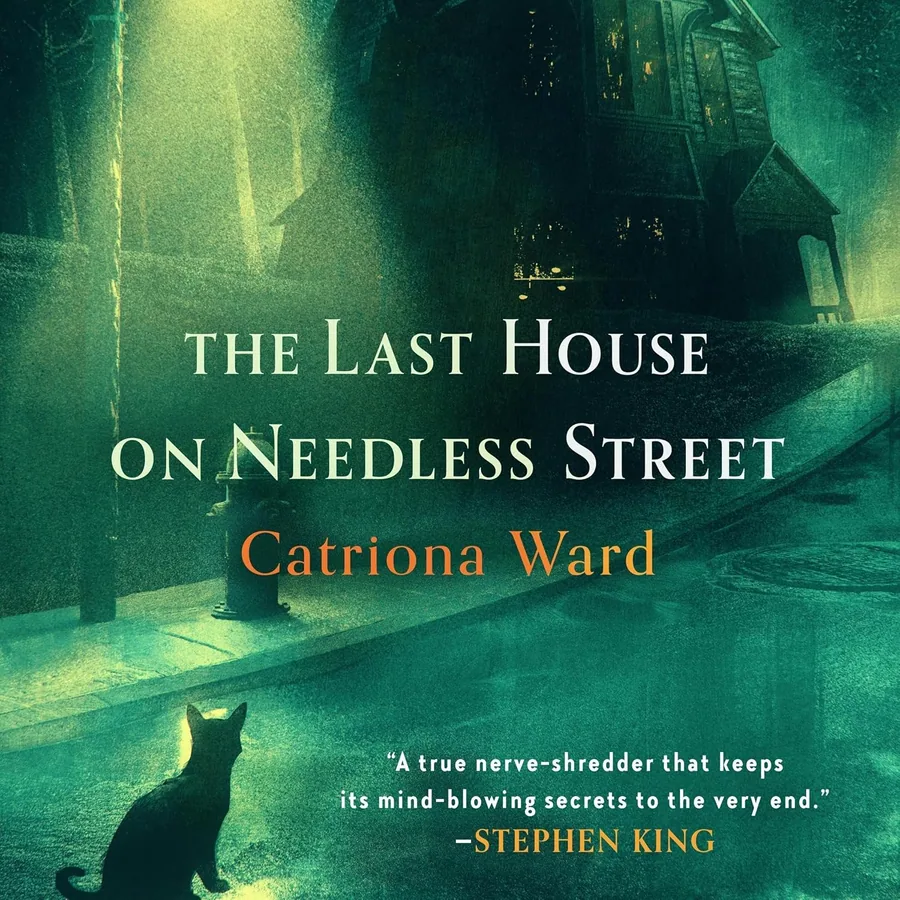
- Some horror novels open the door and shove you down the cellar stairs. This one stands you in the front hall and slowly convinces you the floor isn't where you thought it was. Ward sets her story in a sealed-up house at the end of a dead-end road by the Washington woods, and gives us a household…
- Is The Last House on Needless Street worth reading?
- We scored The Last House on Needless Street 4 out of 5. Catriona Ward's The Last House on Needless Street is psychological horror that runs on misdirection rather than gore: a boarded-up house at the edge of the Washington woods, a man with holes in his memory, a girl kept indoors, and a cat who reads scripture. Deliberately…
Advertisement
More like this
Related books

Headlights
CJ Leede

The Buffalo Hunter Hunter
Stephen Graham Jones

The Queen City Detective Agency
Snowden Wright

Brainstorm
Margaret Belle

The Fine Art of Lying
Alexandra Andrews

Anatomy of an Alibi
Ashley Elston

The Secret Dinner
Raphael Montes

When the Wolf Comes Home
Nat Cassidy

Every Exquisite Thing
Laura Steven

It Could Have Been Her
Lisa Jewell