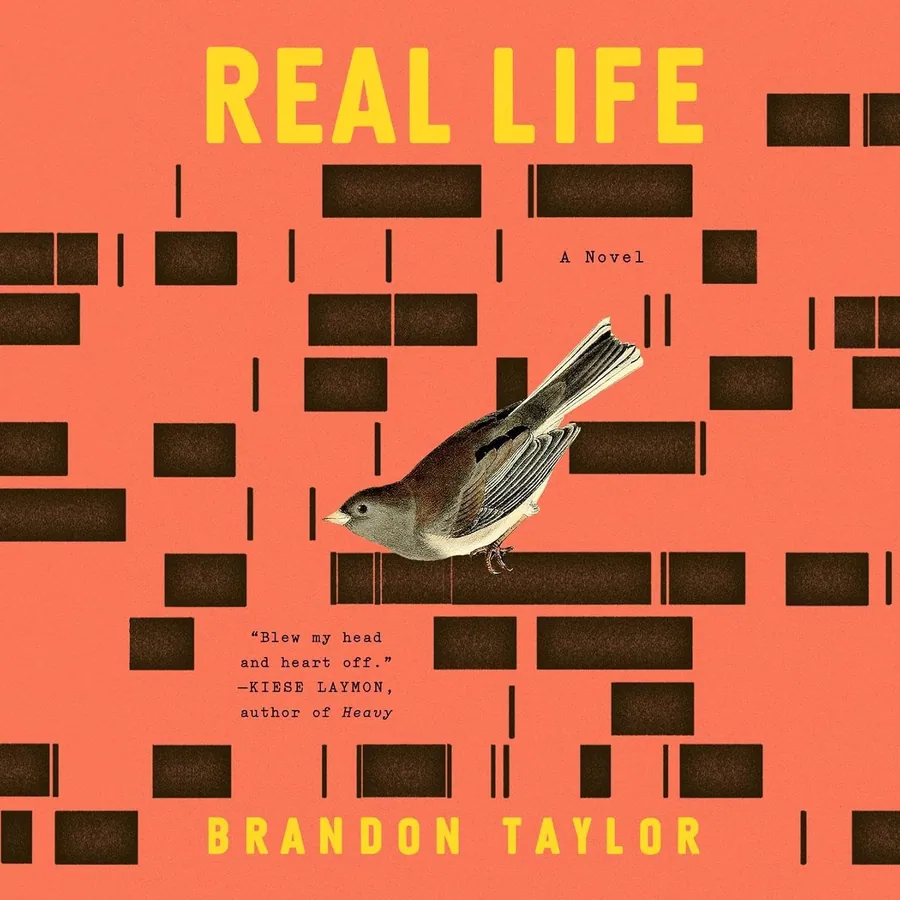
Taylor writes from so deep inside Wallace's head that you start to feel the strain of being him. Real Life isn't a novel of big plot machinery. It's a novel of accumulating pressure. A failed experiment in the lab, a tennis game, a dinner among friends, a charged encounter with a classmate everyone assumes is straight. Each scene seems small until you notice how much restraint Wallace is exercising just to stay in the room. The book's real subject is that restraint, the way a person learns to manage other people's comfort at the steady expense of his own.
The prose is the draw here. There's a passage early on where a colleague contaminates Wallace's nematode cultures, and Taylor spends a startling amount of time on Wallace's reaction, the way he weighs whether to even say anything. I read it twice. It's a small, ruined experiment and also the whole novel in miniature. Taylor lingers on physical detail, the texture of food, the heat of a body, the way a conversation curdles in real time. He's especially good at the social violence hiding inside niceness, the friend whose casual remark lands like a blade, the apology that asks the wounded person to do the consoling.
Wallace's friend group is its own ecosystem, full of academic ambition, frayed loyalty, and unspoken hierarchy. The relationship at the center, with Miller, the classmate everyone reads as straight, is rendered with real tenderness and real menace, sometimes in the same scene. There's a moment where their intimacy tips into something rougher that genuinely made me wince and then made me sit with why it did. Taylor refuses to make any of it clean or redemptive. Desire here is tangled up with power and history, and the book is honest enough to let it stay tangled.
A fair warning on pace and shape: this is a slow, contemplative read built from interiority rather than incident. Long passages stay inside Wallace's thoughts, and the timeline is compressed and quiet by design. Readers who want forward momentum or a tidy arc of resolution may find it withholding. The novel is more interested in the weight of a wound than in healing it. There's also a flashback to Wallace's childhood that arrives with real force and touches on serious harm; it's handled with restraint, but some readers will find it heavy going. None of this is a flaw so much as a fit question.
Why you should read
- Readers who love voice-driven, interior literary fiction over plot
- Anyone drawn to campus novels that interrogate race, class, and queerness
- Readers who like quiet, present-tense intimacy and precise, bodily prose
- Book clubs that like discussing ambiguity and unresolved relationships
What to expect
- The slow, interior pace and compressed single-weekend timeline may frustrate readers who want strong momentum or a resolved ending
- Contains depictions of racism, microaggressions, and a difficult flashback to childhood harm that some readers will find hard to read
What stays with me is what sits under Wallace's composure, the question the book keeps circling of whether a person can ever stop bracing for the next small cruelty. Taylor doesn't offer easy comfort. He offers recognition, which for the right reader matters more. This is literary fiction for people who read for voice, mood, and emotional truth rather than for plot, and on those terms it lives up to the Booker shortlisting and the pile of best-of-year nods it collected.