Reading notes
How Much Does It Cost to Self-Publish a Book in 2026? A Real Budget Breakdown

Advertisement
Sooner or later every independent author asks the practical question hiding behind all the craft advice: how much does it actually cost to self-publish a book in 2026? The honest answer is "anywhere from almost nothing to fifteen thousand dollars," which is true and useless. So this guide does what most articles avoid — it puts real 2026 numbers on every line of the budget, shows you where the money earns its keep, and tells you plainly where it is safe to spend nothing.
Think of this as the budget companion to our guide to self-publishing your first book: that one walks the whole process, this one walks the costs. The good news: you do not need a publisher's bankroll. A determined author with a finished manuscript can put out a genuinely professional book for one to two thousand dollars — and a careful one for far less. What you cannot do is skip the parts that decide whether readers trust the book. Let's price it out.
How much does it cost to self-publish a book in 2026?
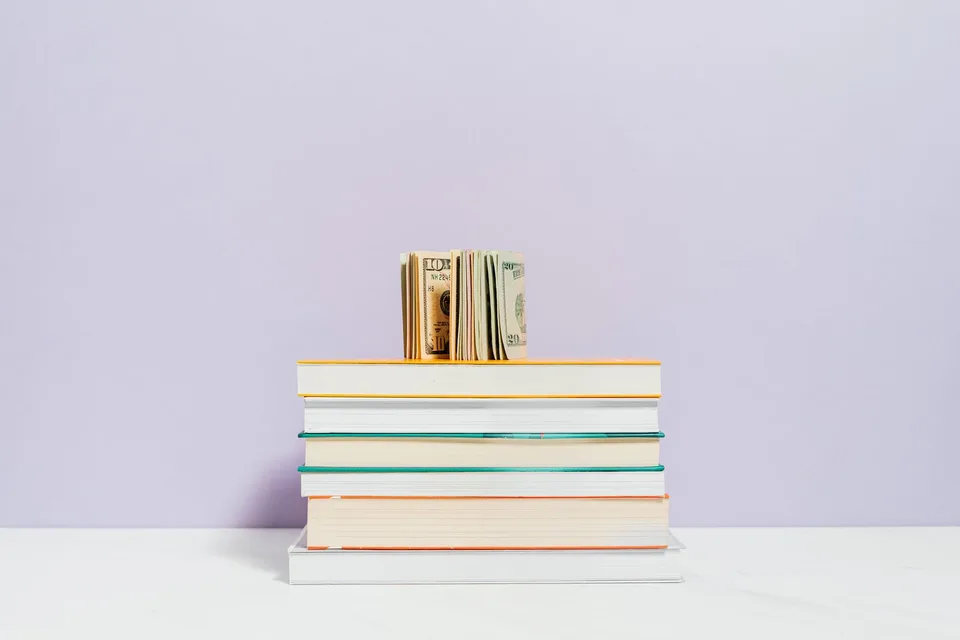
Across the industry in 2026, self-publishing a novel professionally runs somewhere between about $200 and $15,000, and that enormous spread is the whole story. The platforms don't set it — Amazon's Kindle Direct Publishing, the largest storefront, charges nothing to publish and takes its cut from sales. The number is set entirely by the services you buy: editing, a cover, formatting, and small administrative bits.
Most first-time authors land in one of three tiers. A shoestring, do-it-yourself launch comes in around $200–$500 with free tools and a premade cover. A solid, minimum-viable-professional book — the level we'd actually aim for — sits closer to $1,500–$2,000. And a full-service professional production, with every editing layer and custom design, runs $2,000–$15,000. The rest of this guide breaks down what fills each bucket.
What does editing cost — and why is it the biggest line?
Editing is the single largest expense for most serious self-publishers, and it should be — it is the difference between a book readers trust and one they quietly abandon on page twenty. "Editing" is not one job, though, so the cost depends on how many layers your book needs:
- Developmental editing — the big-picture work on structure, pacing, and character — is the priciest, typically $1,000–$3,000 for a novel (an 80,000-word book runs around $2,800 at common 2026 rates). For a first novel it is often the most valuable money you'll spend.
- Copyediting handles grammar, consistency, and continuity at roughly $0.02–$0.04 per word — about $400–$1,200 for a typical novel.
- Proofreading, the final typo sweep after everything is set, is the cheapest pass — commonly a few hundred dollars up to around $1,000.
On book one you may not afford all three layers, and that is fine — but never publish without at least one serious edit by someone who is not you. You can also stretch every editing dollar by sharpening the manuscript yourself first, which is what our self-editing guide is for: the cleaner the draft you hand an editor, the less their time costs you.
How much should a book cover cost?
Your cover is the one piece of marketing every potential reader sees, shrunk to a thumbnail on a crowded retailer screen. An amateur cover signals an amateur book before a word is read, so this is no place to improvise in free design software — and the good news is that a great cover is far cheaper than great editing.
Advertisement
A premade cover — a ready-made design you license and customize with your title — costs roughly $50–$200 and is a smart choice for a first book or a tight budget. A custom cover, designed from scratch for your book, has a 2026 median around $900, with most projects falling between $300 and $1,200 (fantasy trends higher, thrillers and memoirs a little lower). For most debut authors, a strong premade or a mid-range custom cover competes perfectly well; you don't need the most expensive option, just one that looks at home next to the bestsellers in your category.
What about formatting, ISBNs, and proof copies?
This is where careful authors save real money, because the administrative middle of publishing can cost almost nothing.
- Formatting and interior layout turns your manuscript into the ebook and print files readers buy. Free, purpose-built tools produce clean, professional files for a straightforward novel, so this can cost $0. A designer for a polished interior runs up to about $500 (more for image-heavy layouts), but text-driven fiction rarely needs it.
- ISBN — the unique identifier for your edition — can also be free: Amazon's KDP assigns one at no cost (listing Amazon as the publisher of record), which is fine for most first-timers. If you want your own imprint and full distribution flexibility, a single ISBN from the official registry costs $125, and a block of ten runs about $295 — far better value across multiple books.
- Proof copies — the physical test prints you check before approving a paperback — cost only the print price plus shipping, usually around $5–$10 each. Order one or two; your book in your hands catches errors no screen reveals.
Print-on-demand makes a copy only when someone orders it — no inventory, no upfront print run, the printing cost deducted from your royalty — so there is nothing to pay before a single sale. That fact is why self-publishing is affordable at all in 2026.
Where should the money actually go?
If you remember one rule from this entire guide, make it this: roughly sixty to eighty percent of your budget belongs to editing and the cover. Those two things decide whether a reader trusts your book and clicks "buy." Everything else is rounding.
It is genuinely that lopsided. A reader meets your book through its cover and stays for its prose; no formatting trick or premium ISBN rescues weak editing or a homemade cover. So if your budget is $1,500, pour it into the two things that touch the reader directly and use free tools for the rest. That also answers the where-to-cut question: it is safe to spend nothing on formatting and ISBNs, where the free options are genuinely good, but not safe to skip editing or design your own cover to save a few hundred dollars. Cut the costs invisible to readers, never the ones they can see.
What about marketing and launch costs?
Marketing is the one major budget line that is genuinely optional at launch, and that is freeing. The most powerful book marketing — an email list, a simple author website, showing up where your readers already are, and earning honest reviews — costs little or nothing but your time. Paid promotion is a lever you reach for later, not a gate you must pay to pass.
When you do spend, start tiny and measured. A modest website and newsletter service might run $60–$500 a year; retailer and social ads can begin at a few dollars a day; a launch-week price promotion costs margin rather than cash. The discipline is to advertise only once your cover, blurb, and early reviews already convert. Our guide to marketing your book lays out the whole low-cost playbook, and how to get book reviews before launch covers the highest-return, lowest-cost thing you can do for a new title.
Are there ongoing costs after you publish?
Mostly, no — one of self-publishing's quiet advantages. Once your book is live, the platforms cost nothing to keep it there; they earn when you do. Your recurring expenses, if any, are small and elective: a newsletter service as your list grows, perhaps a domain renewal, and whatever advertising keeps paying for itself. There is no annual fee for having published a book. The real ongoing "cost" is time and the occasional refresh — an aged cover, a sharpened description, the next book — never a bill that arrives whether you like it or not.
Advertisement
Is self-publishing worth the cost? An honest word on earning it back
Here is the part too many guides skip. Self-publishing is an investment, and like any investment it can lose money — plenty of first books never earn back their production costs, and treating the spend as a guaranteed return is the fastest way to feel cheated. The math, though, is more hopeful than it sounds. Indie authors keep roughly 60–70% of each sale, versus the small fraction a traditional contract pays, so a sensibly priced book recovers a $1,500 production cost within the first few hundred sales — a real but reachable bar.
The honest framing: think in books, not a book. Your first title is partly tuition — you are buying the skills of briefing an editor, commissioning a cover, and learning how readers find you — and that knowledge pays off across every book that follows. A backlist is what turns a hopeful debut into a sustainable readership, because each new release sends readers back to the older ones. Budget your first book as a serious experiment you can afford, not a lottery ticket, and the worst case is that you learned to publish properly. To go deeper on the economics of indie books, David Gaughran's Let's Get Digital is the clearest, most current map of how independent books actually earn their keep — and the rare publishing guide that talks plainly about money.
As an Amazon Associate, Book of the Day earns from qualifying purchases — at no extra cost to you. We only point to books we'd actually press into a friend's hands.
When your book is published, you can submit it to Book of the Day for consideration as a daily pick — submissions are currently free.
Where to go from here
The real cost of self-publishing in 2026 is not a mystery and not out of reach: budget for editing and a cover, use free tools for the rest, and let marketing grow with your sales. Spend where the reader can tell, save where they can't, and treat book one as the start of a shelf.
From here, the path connects up: read the full process in our guide to self-publishing your first book, sharpen the manuscript before you pay an editor with our self-editing guide, and plan the launch with how to market your book and how to get reviews before launch. Still drafting? Start with our guide to writing your first novel. And when the book is ready, submit it to Book of the Day, browse our debut novels shelf, wander the archive, or learn more about Book of the Day and our FAQ. The hardest part is behind you — you finished the book.
Photographs via Pexels (Pexels License).
Frequently asked questions
- How much does it cost to self-publish a book in 2026?
- It ranges from about $200 to $15,000, depending entirely on the services you buy. The platforms themselves are free to publish on. A shoestring, do-it-yourself launch with free tools and a premade cover can cost $200–$500; a solid, minimum-viable-professional book runs around $1,500–$2,000; and a full custom production with every editing layer can reach $2,000–$15,000.
- Can you self-publish a book for free?
- Almost, but not entirely, if you want a book readers will trust. Publishing on Amazon KDP costs nothing, formatting tools can be free, and KDP assigns a free ISBN. The cost you cannot responsibly avoid is editing — at minimum one serious outside edit — and ideally a professional or premade cover. So the realistic floor is closer to a few hundred dollars than truly zero.
- How much should I spend on editing and a cover?
- Roughly 60–80% of your total budget should go to editing and the cover, because those two things decide whether readers trust and buy your book. Editing ranges from a few hundred dollars for proofreading up to $1,000–$3,000 for developmental work; a premade cover runs $50–$200 and a custom cover has a median around $900 ($300–$1,200). Use free tools for formatting and ISBNs to free up money for these two.
- How much does book editing cost per word?
- Copyediting commonly runs about $0.02–$0.04 per word, which works out to roughly $400–$1,200 for a typical novel. Developmental editing is priced higher and usually quoted as a project fee, around $1,000–$3,000 for a full-length book, while proofreading is the cheapest pass.
- Is self-publishing worth the cost?
- It can be, but it is an investment, not a guaranteed return — some first books never earn back their production costs. Indie authors keep about 60–70% of each sale, so a sensibly priced book can recover a $1,500 budget within the first few hundred sales. The smartest framing is to treat your first book partly as tuition: the skills and audience you build pay off across every book that follows.
Browse all subjects
Move from this note into the full genre index.
Read the archive
Browse past daily picks when the catalog is live.
Submit a book
Send a title for future consideration.
More from the blog
31 Halloween Books for Adults, Rated by How Scared You Want to Be (2026)
The best Halloween books for adults in 2026: 31 spooky reads, new and classic, each rated 1 to 5 for scariness, plus short picks to finish by October 31.
The Best Audiobooks of 2026: 15 Recordings Worth a Credit, Ranked
Fifteen 2026 audiobooks ranked by what the recording adds, narrator and runtime on every one, from a 29-hour Mississippi epic to a 3-hour war novel.
Is the Audible Free Trial Worth It? What You Get, and How to Spend the First Credit
What an Audible trial includes on each tier, why a credit and the included catalogue are different things, and the books worth a first credit. Updated 2026.
Advertisement


