Where to read or listen
- Is there an audiobook of This Is How You Lose the Time War?
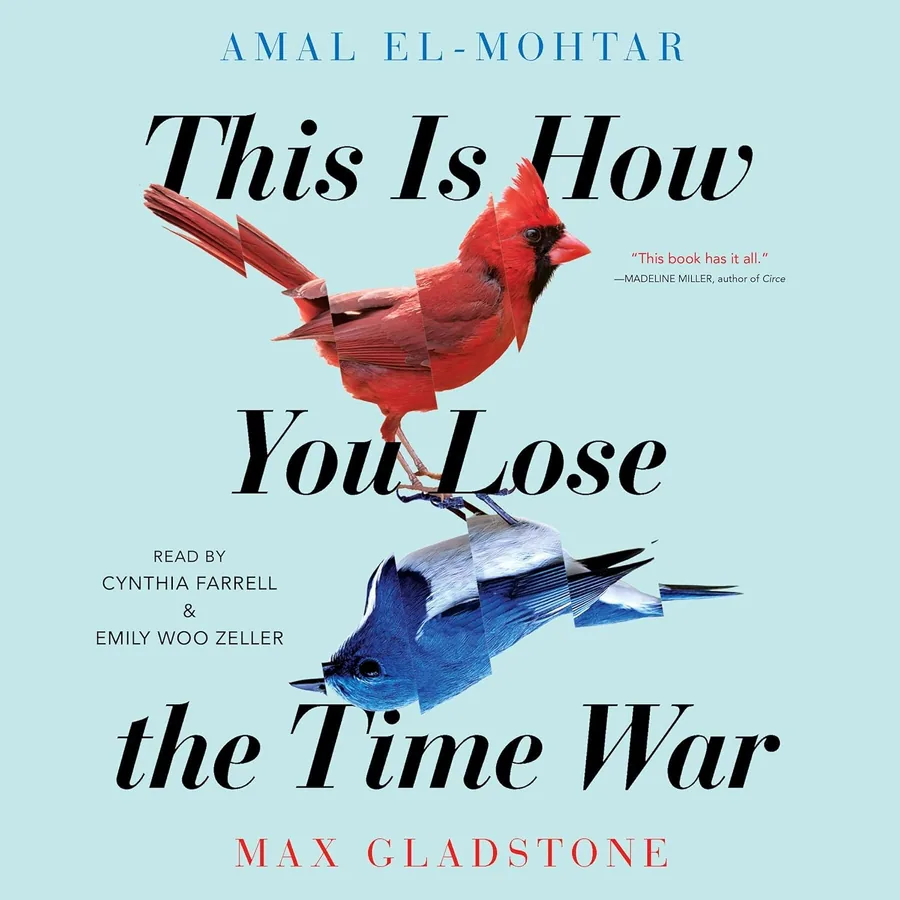
- Yes. This Is How You Lose the Time War has an Audible audiobook edition, narrated by Cynthia Farrell and Emily Woo Zeller.Listen free with Audible
We earn from qualifying Amazon purchases.
- How long is the This Is How You Lose the Time War audiobook?
- The This Is How You Lose the Time War audiobook runs 4 hr 16 min.
- Is This Is How You Lose the Time War on Kindle Unlimited?
- Yes. This Is How You Lose the Time War was included with Kindle Unlimited when we last checked on October 4, 2026.
- What formats is This Is How You Lose the Time War available in?
- On Amazon, This Is How You Lose the Time War comes as a Kindle ebook, a paperback and a hardcover.
Common questions
- What is This Is How You Lose the Time War about?
- Two operatives, Red and Blue, fight on opposite sides of a war waged up and down the branching threads of time. They reshape battles, civilizations, whole futures, nudging history toward their faction's victory. And in the middle of all that strategic carnage they start writing to each other…
- Is This Is How You Lose the Time War worth reading?
- We scored This Is How You Lose the Time War 4.2 out of 5. Amal El-Mohtar and Max Gladstone's This Is How You Lose the Time War is a slim, fierce epistolary romance between two enemy agents trading letters across the wreckage of warring timelines. It's science fiction built on language and longing more than mechanics, and it rewards…
Advertisement
More like this
Related books

Full Speed to a Crash Landing
Beth Revis

Scion
James Islington

The Infinite State
Richard Swan

Vox
Christina Dalcher

Blightfall
Brandon Sanderson and Janci Patterson

I Could Give You the Moon
Ann Liang

There Is No Antimemetics Division: A Novel
qntm

Mile High
Liz Tomforde

The Paper Palace
Miranda Cowley Heller

Under Story
Chloe Benjamin