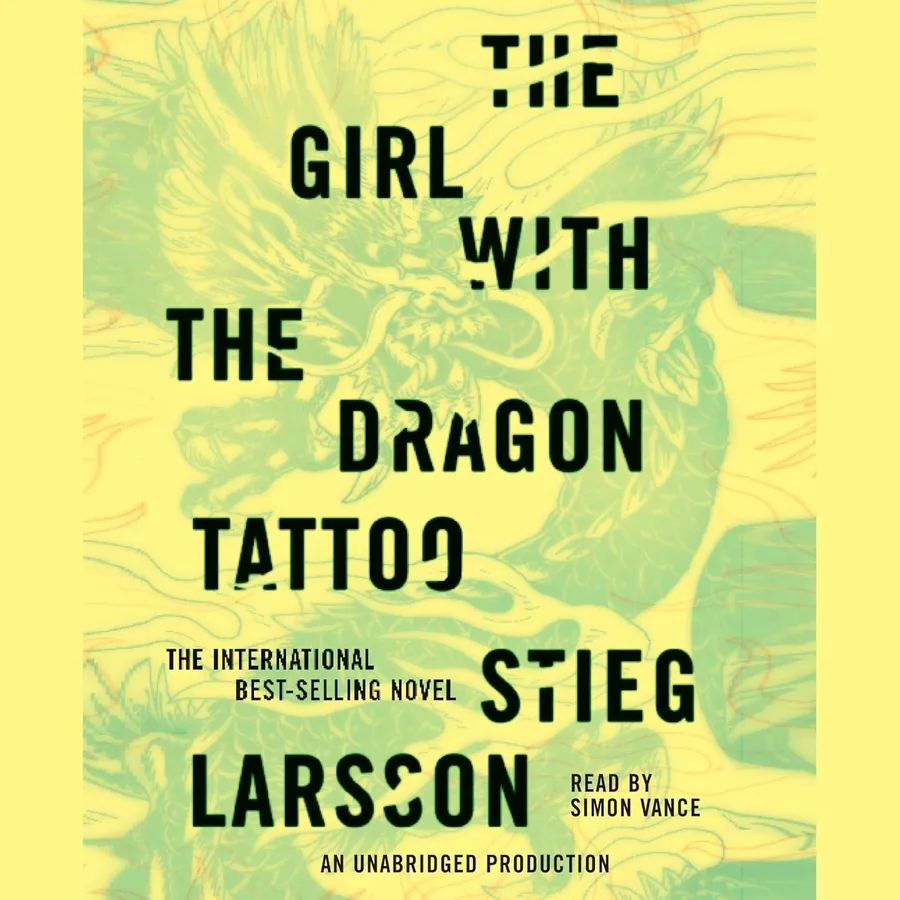
Where to read or listen
- Is there an audiobook of The Girl with the Dragon Tattoo?
- Yes. The Girl with the Dragon Tattoo has an Audible audiobook edition, narrated by Simon Vance.Listen free with Audible
We earn from qualifying Amazon purchases.
- How long is the The Girl with the Dragon Tattoo audiobook?
- The The Girl with the Dragon Tattoo audiobook runs 16 hr 19 min.
- Is The Girl with the Dragon Tattoo on Kindle Unlimited?
- No. The Girl with the Dragon Tattoo was not included with Kindle Unlimited when we last checked on October 2, 2026.
- What formats is The Girl with the Dragon Tattoo available in?
- On Amazon, The Girl with the Dragon Tattoo comes as a Kindle ebook, a paperback and a hardcover.
Common questions
- What is The Girl with the Dragon Tattoo about?
- There's an old-fashioned mystery buried inside this very modern book, and that's its best trick. Strip away the journalism feud, the corporate intrigue, and the chilly Swedish weather, and you've got a locked-room puzzle stretched across an entire island: a girl who disappeared during a family…
- Is The Girl with the Dragon Tattoo worth reading?
- We scored The Girl with the Dragon Tattoo 4.4 out of 5. Stieg Larsson's The Girl with the Dragon Tattoo is the Swedish thriller that turned a cold-case mystery into a global phenomenon. It pairs a disgraced financial journalist with a fierce, antisocial investigator named Lisbeth Salander to crack a vanishing that's haunted a…
Advertisement
More like this
Related books

The Secrets We Hide
Karin Slaughter

The Terminal List
Jack Carr

All the Colors of the Dark
Chris Whitaker

The Jigsaw Priest
Margaret Belle

The Secret History
Donna Tartt

Recursion
Blake Crouch

Cool Machine
Colson Whitehead

My Husband's Wife: A Novel
Alice Feeney

Axiom's End
Lindsay Ellis

In Cold Blood (Vintage International)
Truman Capote